
Most People Come to Île de la Cité for Notre-Dame. I Come Back for Everything Else.
A slow walk through hidden streets, flower markets, and the overlooked corners of Paris’s historic heart

Most people arrive at Île de la Cité looking for one thing.
I understand why.
Notre-Dame pulls people toward it long before they even cross the bridge. You can see the towers rising above the Seine from all over Paris, and once you arrive, the crowds gather naturally in front of it.
Me? I come for everything around it.
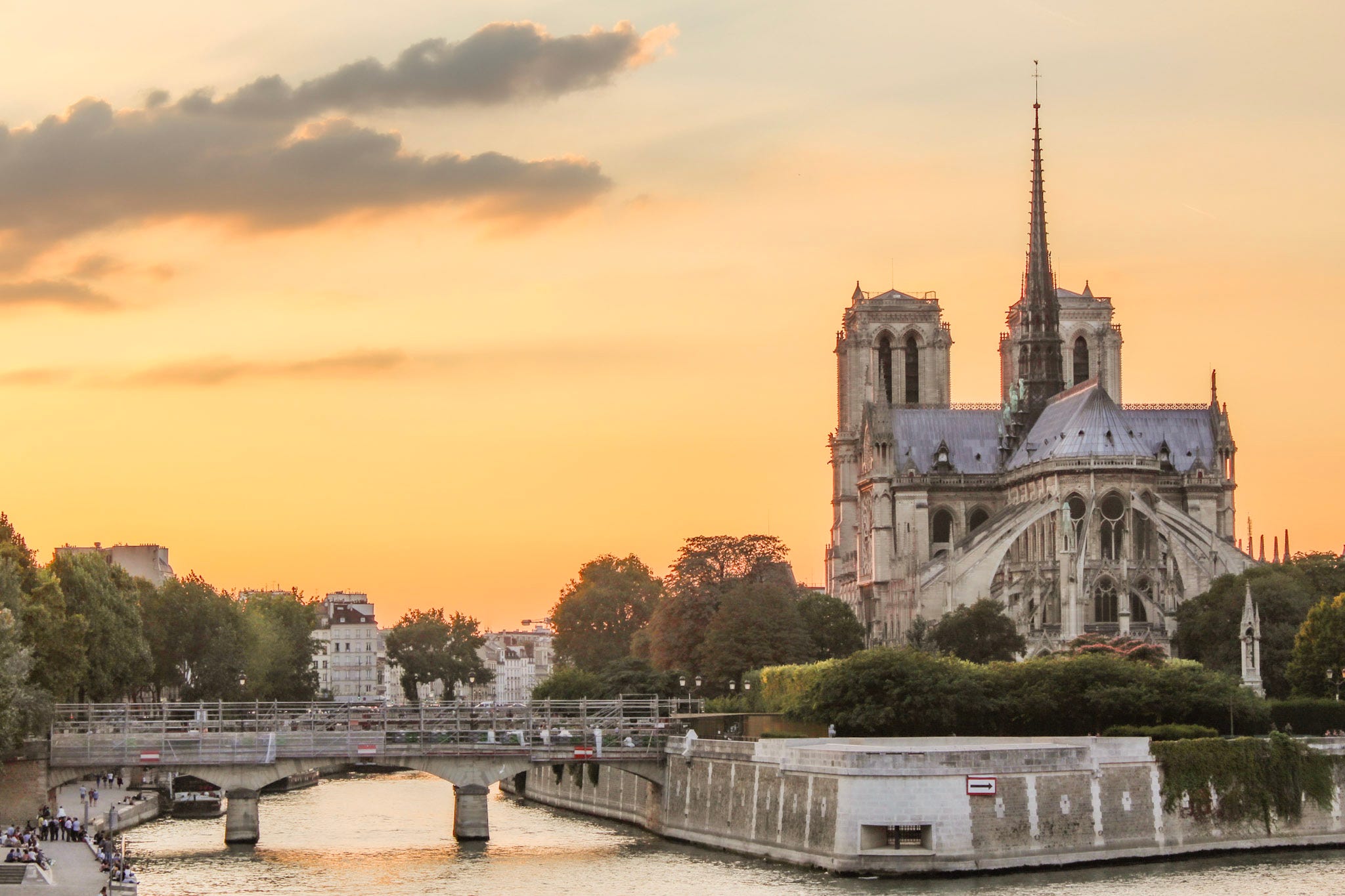
Because beyond Notre-Dame, Île de la Cité still holds pockets of old Paris. Squares shaded by chestnut trees. Narrow medieval streets. Flower markets beneath iron pavilions. Little corners that somehow feel removed from the city surrounding them.
This is the larger of the two islands sitting in the very centre of Paris, between Saint-Germain-des-Prés and the Marais. Long before the Louvre became home to French royalty, the kings of France lived here.
And yet, despite all of that history and important landmarks found here, what I love most about Île de la Cité is its atmosphere.
I’ve always loved walking through old cities this way. Following narrow streets without much of a plan, crossing the same cobblestones generations before me once crossed, noticing the small details most people pass by. The rhythm of café terraces. Church bells echoing between stone buildings. The feeling that parts of Paris still unfold slowly if you let them.
Here, I always begin at Square du Vert-Galant.
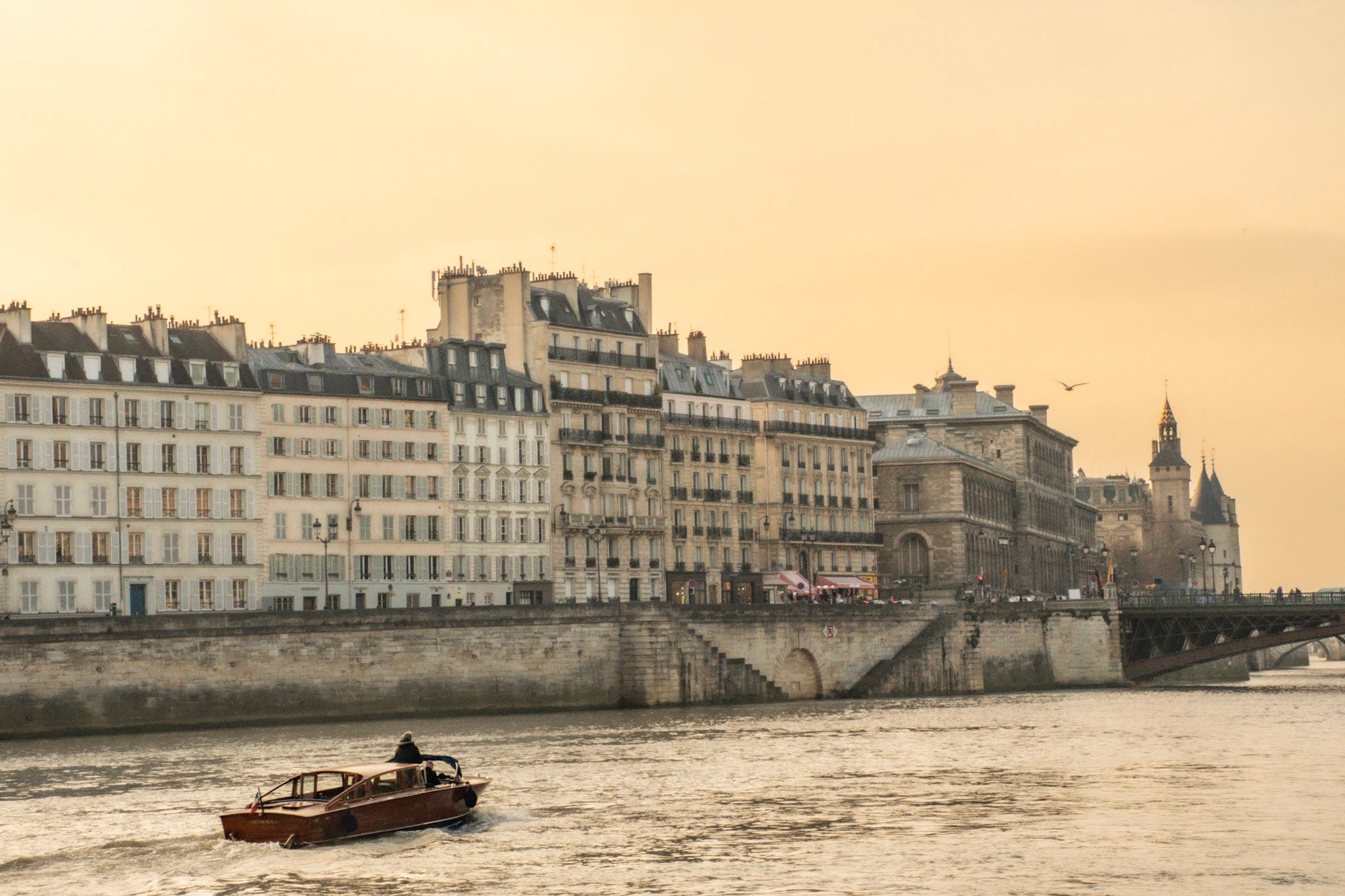
At the western tip of the island, this small triangular park stretches into the Seine like the front of a ship. The river wraps around you on both sides while Paris slowly unfolds in every direction.
The Louvre rises on one side; the Institut de France, on the other. Boats move beneath Pont Neuf. Couples sit along the stone embankment with a bottle of wine tucked between them.
Even in central Paris, it can feel surprisingly calm here.
Under the willow trees, people settle in with a book, a quick bite or simply sit watching the river pass by. I’ve always thought this is one of the best places in Paris to start or end the day.
Especially at sunset.
The light softens across the Seine, and suddenly the entire city seems to glow gold.
From here, I walk toward Place Dauphine.
Most visitors pass through it quickly, if they notice it at all. But for me, it’s one of the prettiest squares in Paris.
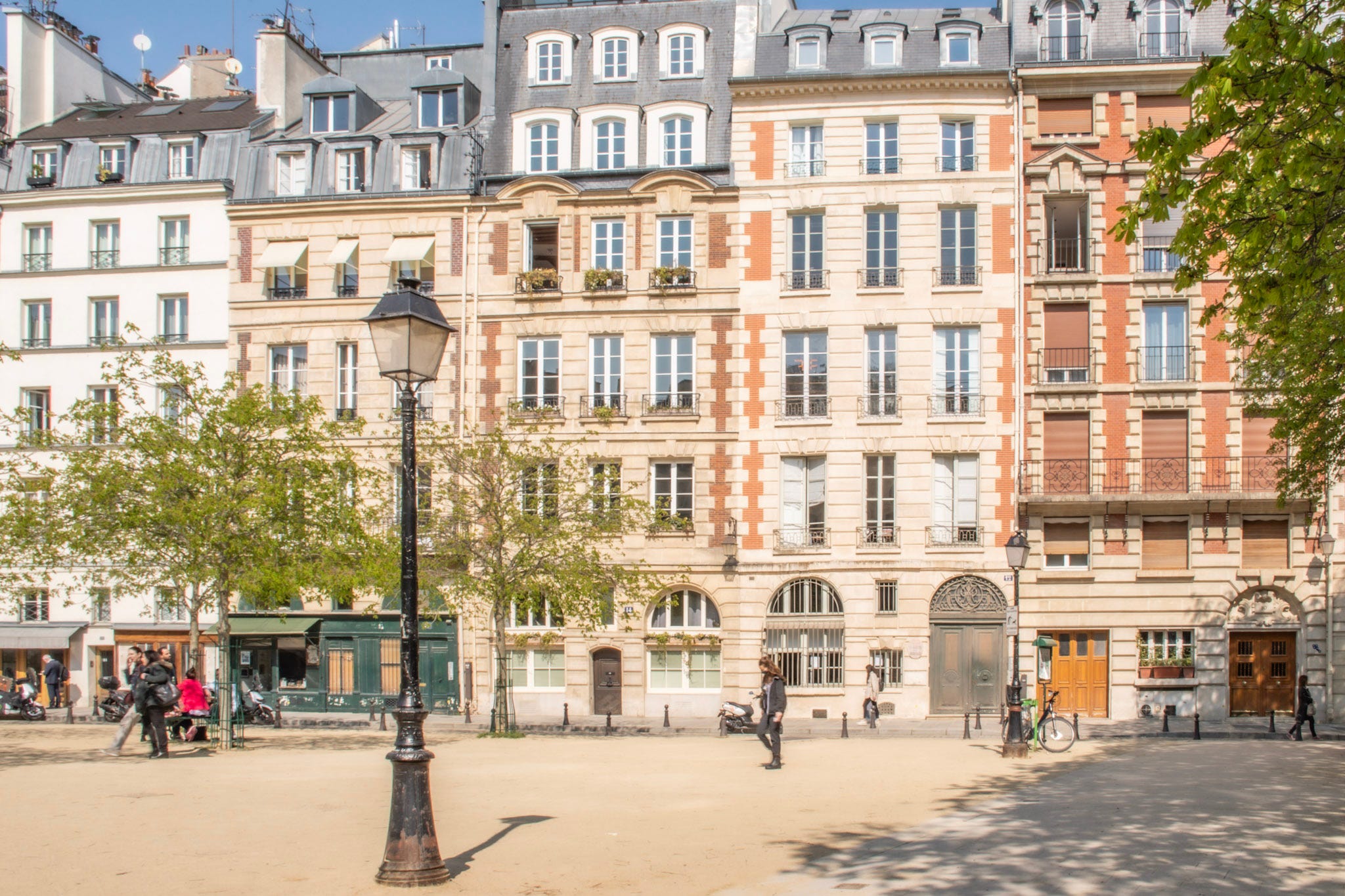
Built in 1609 by Henry IV for his son, the future Louis XIII, Place Dauphine feels more intimate than the grand Parisian squares visitors usually seek out.
Chestnut trees form a canopy overhead, keeping the square cool and shaded in warmer months. Beneath them, locals gather at café terraces or lean over small pétanque courts while glasses clink in the background.
The buildings surrounding the square still retain their original façades. Tall windows. Slate roofs. And, surprisingly, not all in the pale Parisian stone.
There’s something quite elegant about it.
It feels residential. Lived in.
From there, I continue deeper into the island toward the Marché aux Fleurs Reine Elizabeth II.
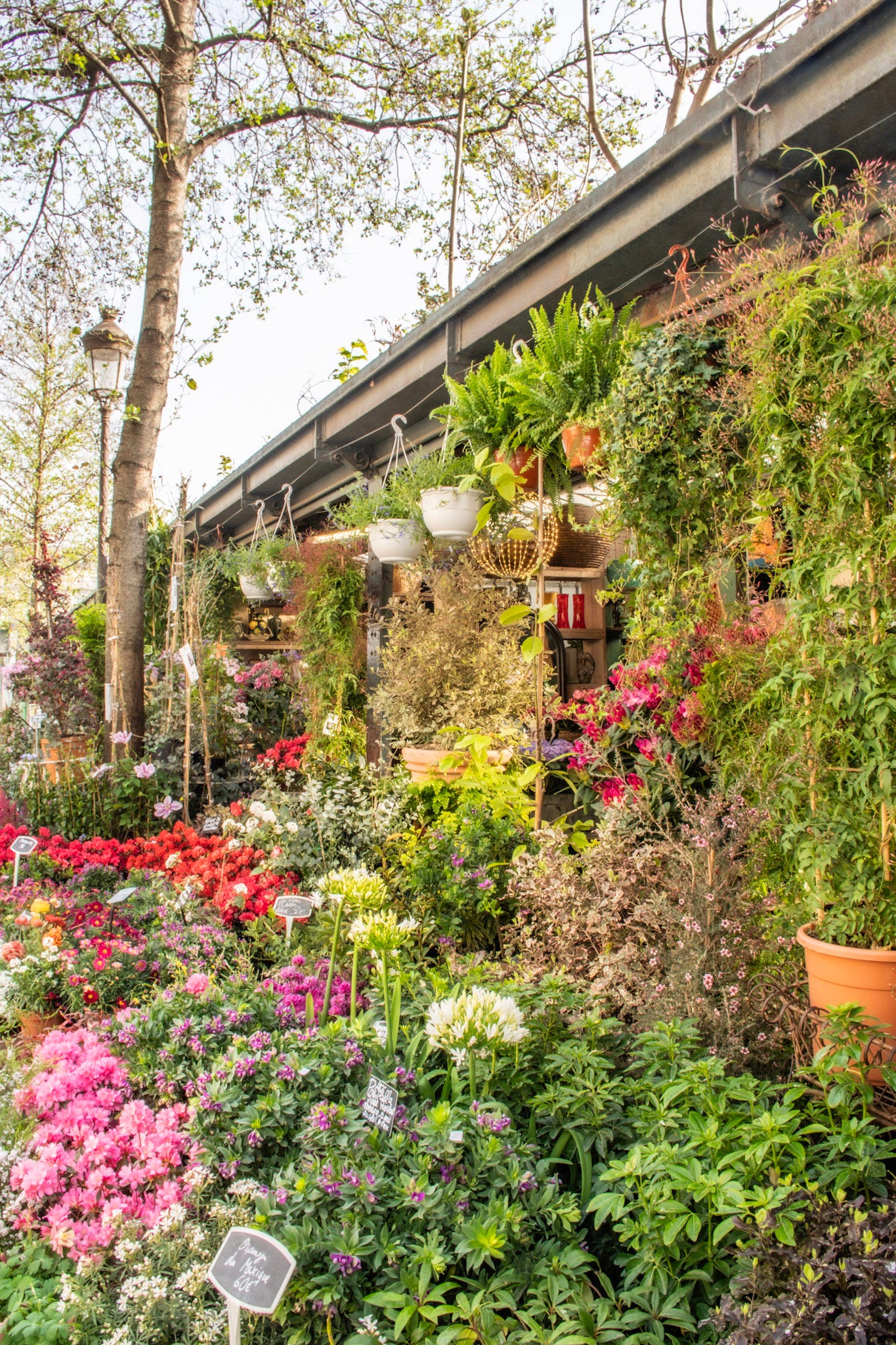
Along Quai de la Corse, the market spills beneath antique iron pavilions with glass roofs that have stood here since the 1800s.
Parisian florists really are an institution in their own right.
Buckets overflow with roses, lavender, peonies, and tiny bouquets wrapped carefully in paper. Some feel destined for apartment tables. Others for celebrations, dinner invitations, apologies, or everyday rituals that need no explanation.
I love the contrast here.
The softness of flowers against old stone buildings. The colour against the pale Parisian façades.
Even with tourists moving nearby toward Notre-Dame and Sainte-Chapelle, the market somehow keeps its own slower rhythm.
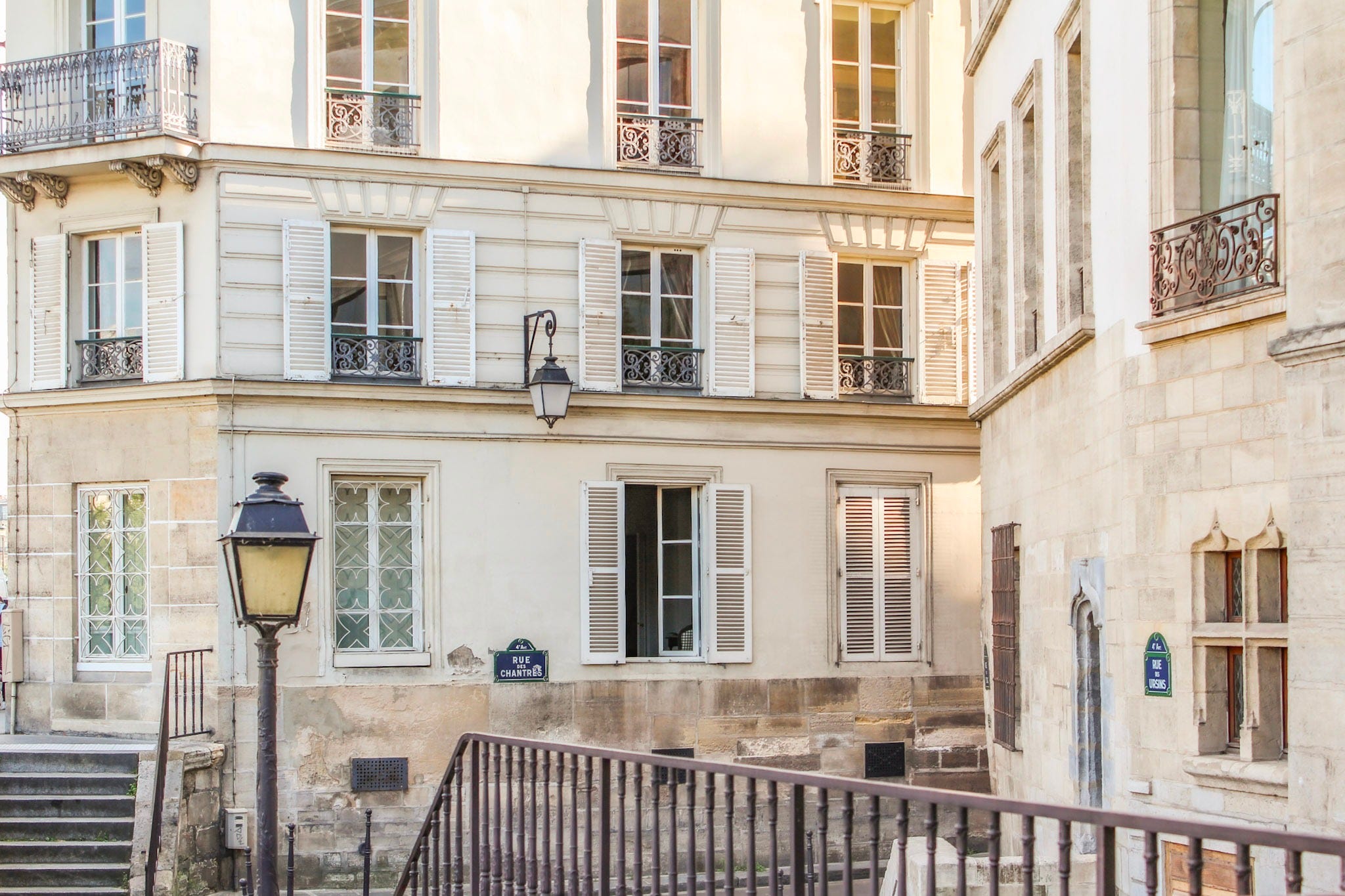
Then I take a small detour.
I walk down Rue des Ursins, one of the island’s narrow medieval streets leading toward Quai aux Fleurs.
It becomes quieter immediately.
After passing the tiny garden at Les Ursins, the street narrows further beside an old stone house with medieval window frames still intact. Lanterns overhead. It’s difficult to believe you are standing in the centre of modern Paris.
In the 16th century, this street was once called Hell Street. Now it feels almost suspended in time.
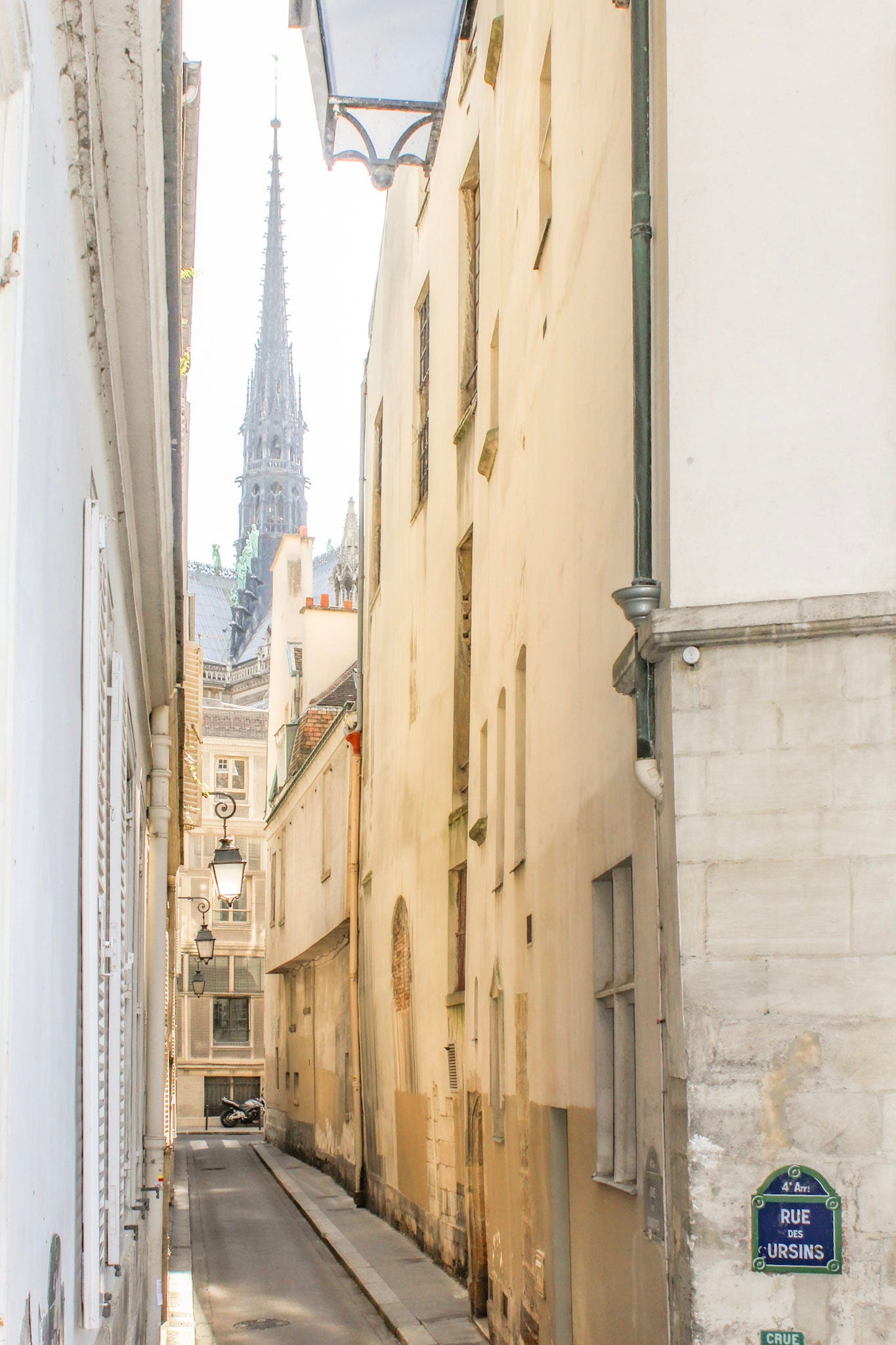
At the end of Rue des Ursins, if you look up from Quai aux Fleurs, you can catch sight of Notre-Dame’s spire rising above the rooftops.
It’s one of those views that feels accidental and cinematic at the same time.
Turn right onto Rue des Chantres, which remains one of the narrowest streets in Paris.
Dark and quiet beneath the cathedral walls, it once housed the singers of Notre-Dame’s cloister. Little has changed here over the centuries. The street still feels medieval in scale, especially early in the morning before the city fully wakes, and very little light seeps through.
At the end, I continue by turning right again onto Rue Chanoinesse, a street that has held centuries of Parisian stories.
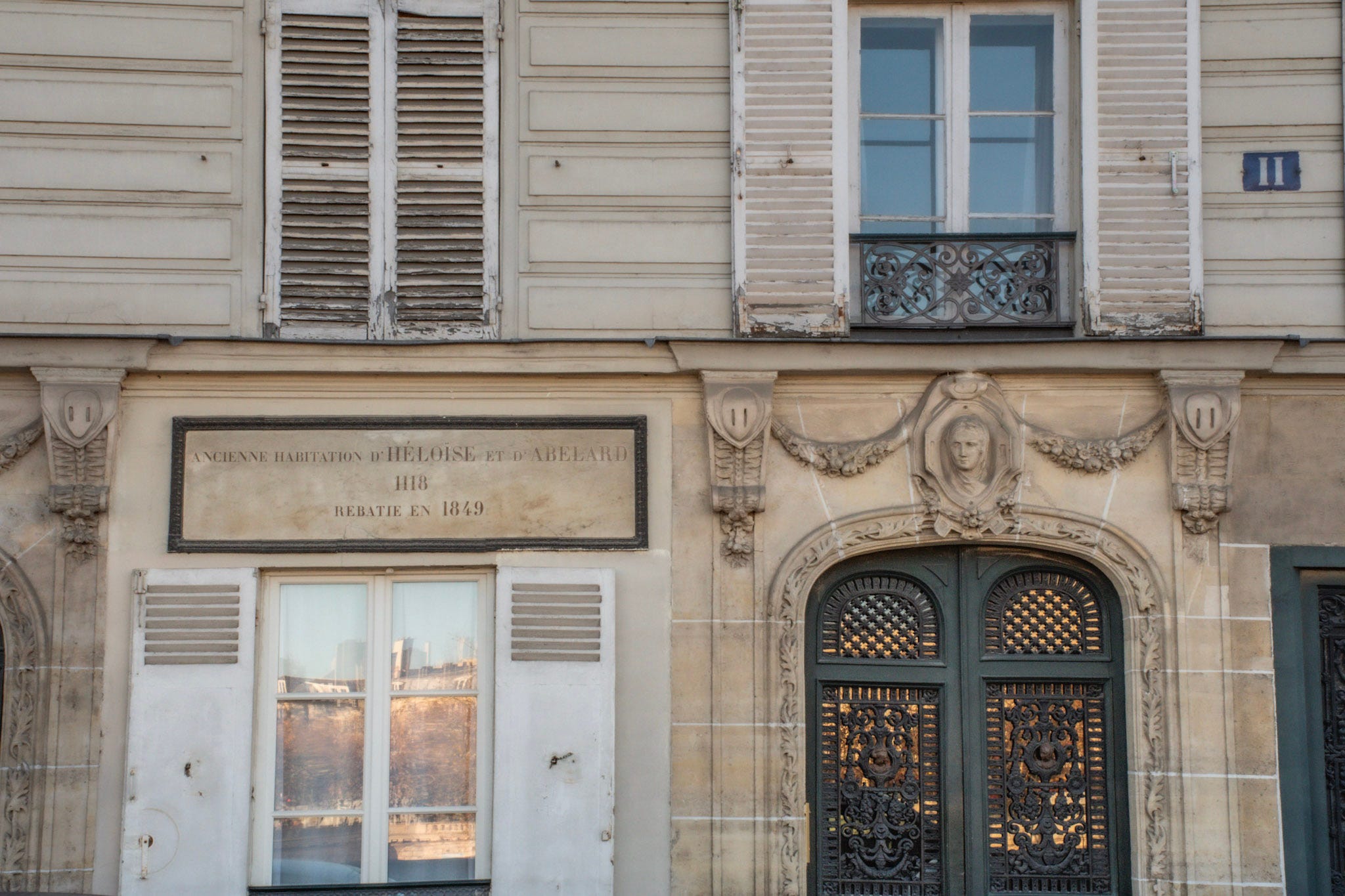
Engraved in stone marks the former home of Héloïse and Abelard, medieval Paris’s most famous tragic lovers. Their scandalous love affair unfolded here in the 12th century, hidden within these narrow streets.
It’s the kind of detail that most walk right past.
A few steps later, the wisteria-covered façade of Au Vieux Paris d’Arcole appears, one of the most photographed cafés in Paris. And, it’s easy to see why.
The building dates back to 1512, but what draws people in today is the wisteria climbing across the façade each spring. Purple blooms spill over the building and wrap around the terrace until it almost disappears beneath them.
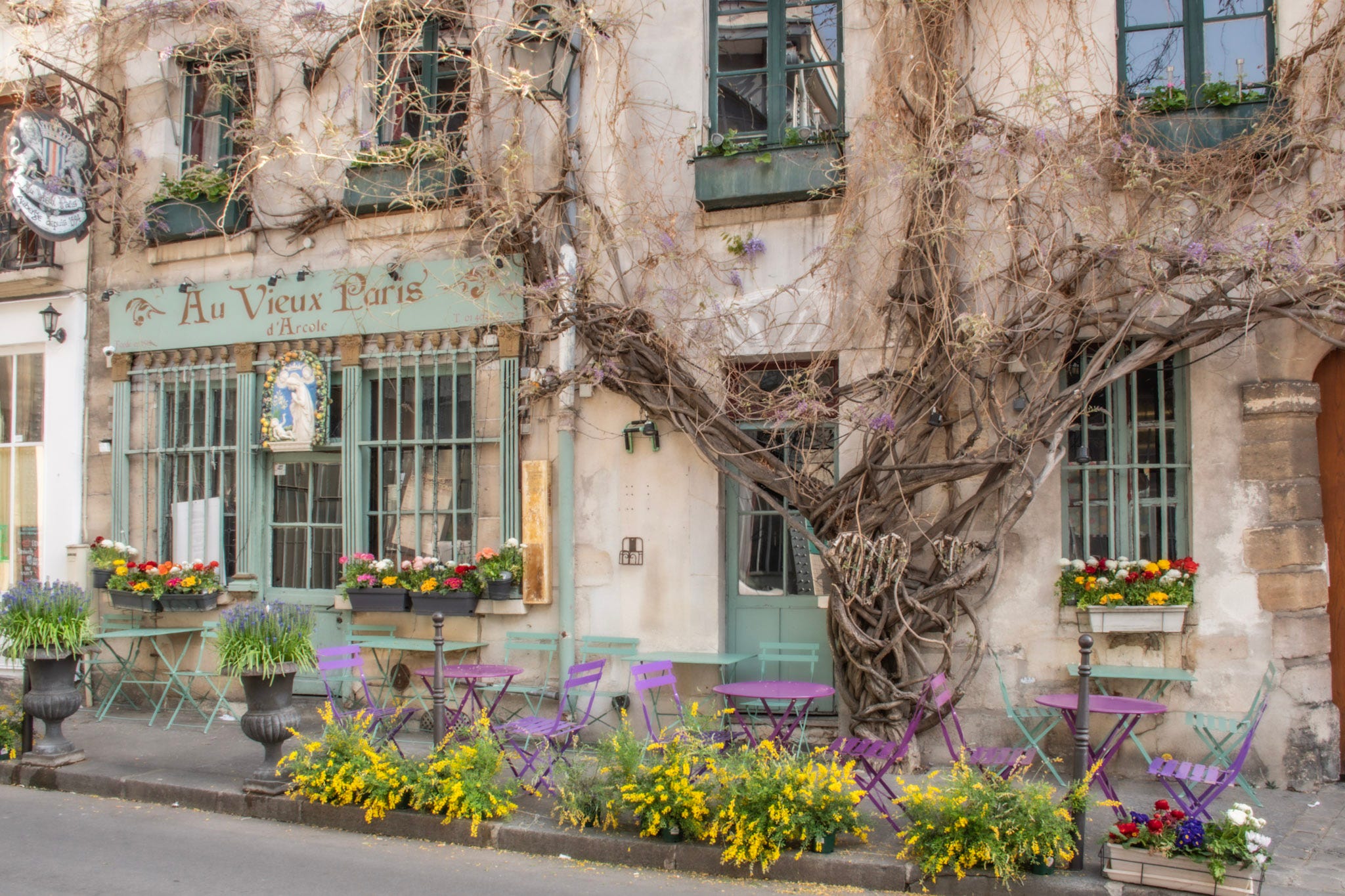
Almost too beautiful to be real. But it is.
To close the loop, I turn right again onto Rue de la Colombe until I’m back where I started on Rue des Ursins.
For a moment, this loop aligns everything into one of those perfectly Parisian scenes: old stone buildings, narrow streets, soft light, glimpses of Notre-Dame above the rooftops.
This part of the island feels strangely removed from the Haussmann boulevards, sitting only a few streets away.
One moment you’re surrounded by traffic and crowds. The next, you’re standing in silence on a narrow lane beneath centuries-old stone. And somehow, despite being steps from some of the busiest attractions in Paris, the island still feels removed from it all.
That’s what I return to Île de la Cité for.
Not only the history or the architecture. But the feeling of discovering pockets of stillness hidden inside one of the most visited parts of Paris. Proving to myself, it is still possible to find them. It requires a dash of patience and curiosity, but they are there.
Most people experience the island while moving toward something. A cathedral. A chapel. A ticket line. A photograph.
But Île de la Cité becomes far more interesting once you stop chasing the next thing.
That’s when you notice the flower stalls being packed away for the evening. The medieval streets hidden behind Notre-Dame. The way the Seine surrounds the island on all its sides, making it feel separate from the rest of the city, even now.
And somehow, in the very centre of Paris, pockets of silence still exist here. I think that’s why I keep returning.
If this slower way of travelling resonates with you, the Close Circle is where I share more of it.
Members receive monthly gifts, bonus guides and offers, access to our private chat, and thoughtful planning tools designed to help you travel more intentionally.
That includes The Unrushed Itinerary Method, my signature planning workbook built around creating trips with more meaning.
Because the most memorable parts of Europe are rarely the rushed ones.
Beautifully written. Thank you for sharing so the rest of us who value quiet can experience a bit of this with you
I’m heading to Paris in June, these are some great tips! Thanks for sharing