
The Paris Street I Always Return To
A slow walk down Rue du Bac in Saint-Germain-des-Prés.

There is a particular street in Paris that I return to again and again.
Not the grand boulevards.
Not the famous avenues.
A neighbourhood street called Rue du Bac.
The kind of street that rewards slow walking. Where you notice things differently the second time… and even more the third.
The kind where everyday life spills gently onto the sidewalk.
In the mornings, the fishmonger sprays down the pavement in front of his shop, sending a thin stream of water along the curb.
Across the street, rows of golden rotisserie chickens slowly turn in the butcher’s window, their scent drifting down the block.
Flower shops set their buckets outside, bouquets spilling onto the sidewalk in soft clouds of colour.
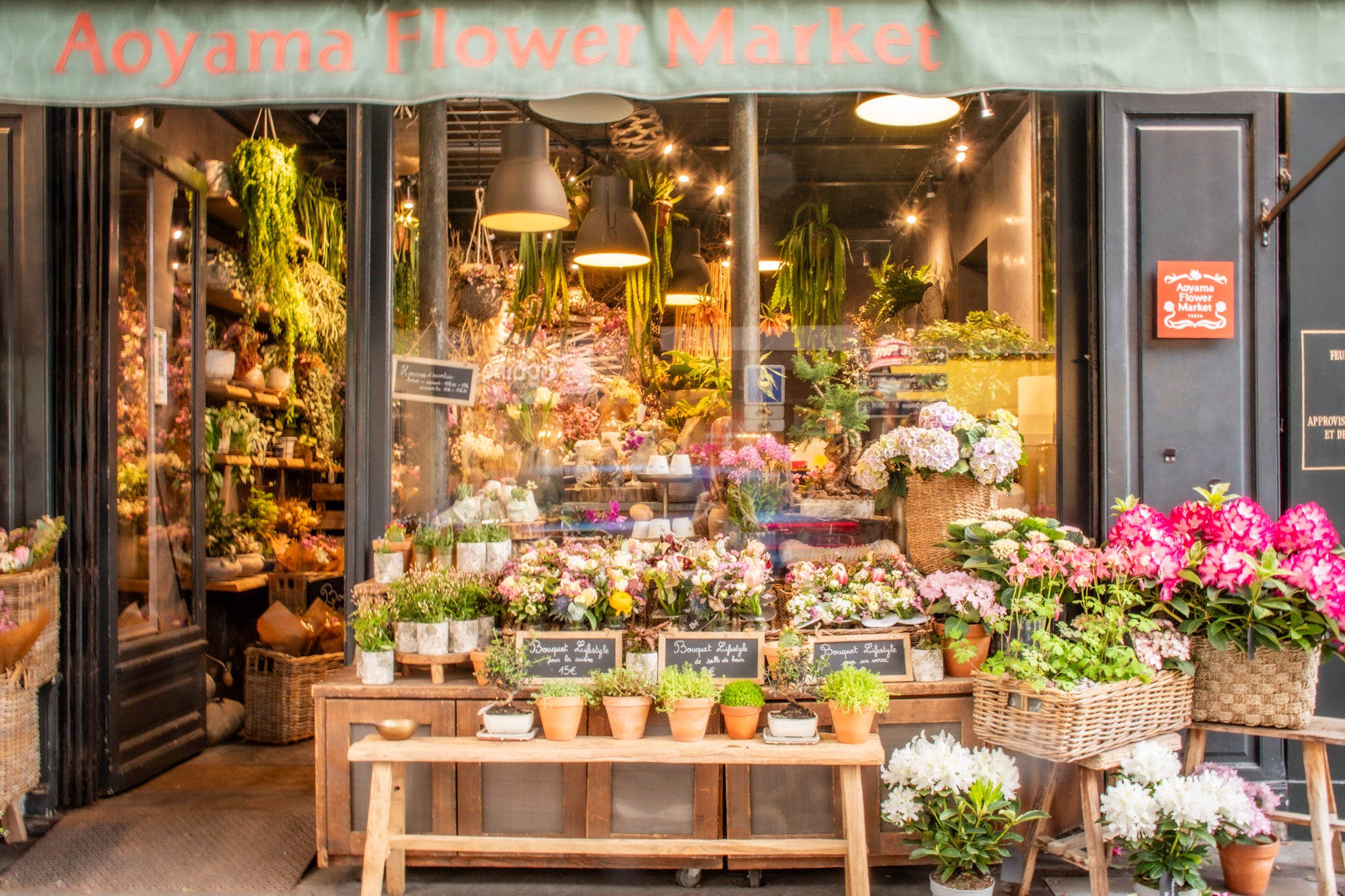
If you’d like to follow along, I’ve marked the places mentioned in this walk, and more, on a curated map for you.
And after a couple of days of staying here, something subtle begins to happen.
The shopkeepers start to recognize you. A quiet “bonjour, madame,” as you step outside in the morning. A nod from the café waiter as you pass.
Over the years, I’ve stayed three different times in pieds-à-terre just around the corner, where Rue de Grenelle meets Rue du Bac.
Streets like this carry their history quietly.
In fact, Rue du Bac has been here far longer than most people realize.
Its name dates back to the 16th century, when a small ferry — a bac — carried Parisians across the Seine before bridges connected this part of the Left Bank to the Tuileries gardens on the opposite shore.
The ferry is gone now, replaced long ago by bridges, but the street kept its name.
Over the centuries, it quietly became one of the most elegant streets of the Left Bank.
Writers, aristocrats, and artists once lived behind the tall doors and courtyards that still line the street today.
Even now, if you look carefully, you’ll notice the discreet plaques and carved stone entrances that hint at a much older Paris.
Small Shops Worth Stepping Into
What I love most about Rue du Bac is that the boutiques and shops feel quietly curated for Parisians rather than designed for tourists.
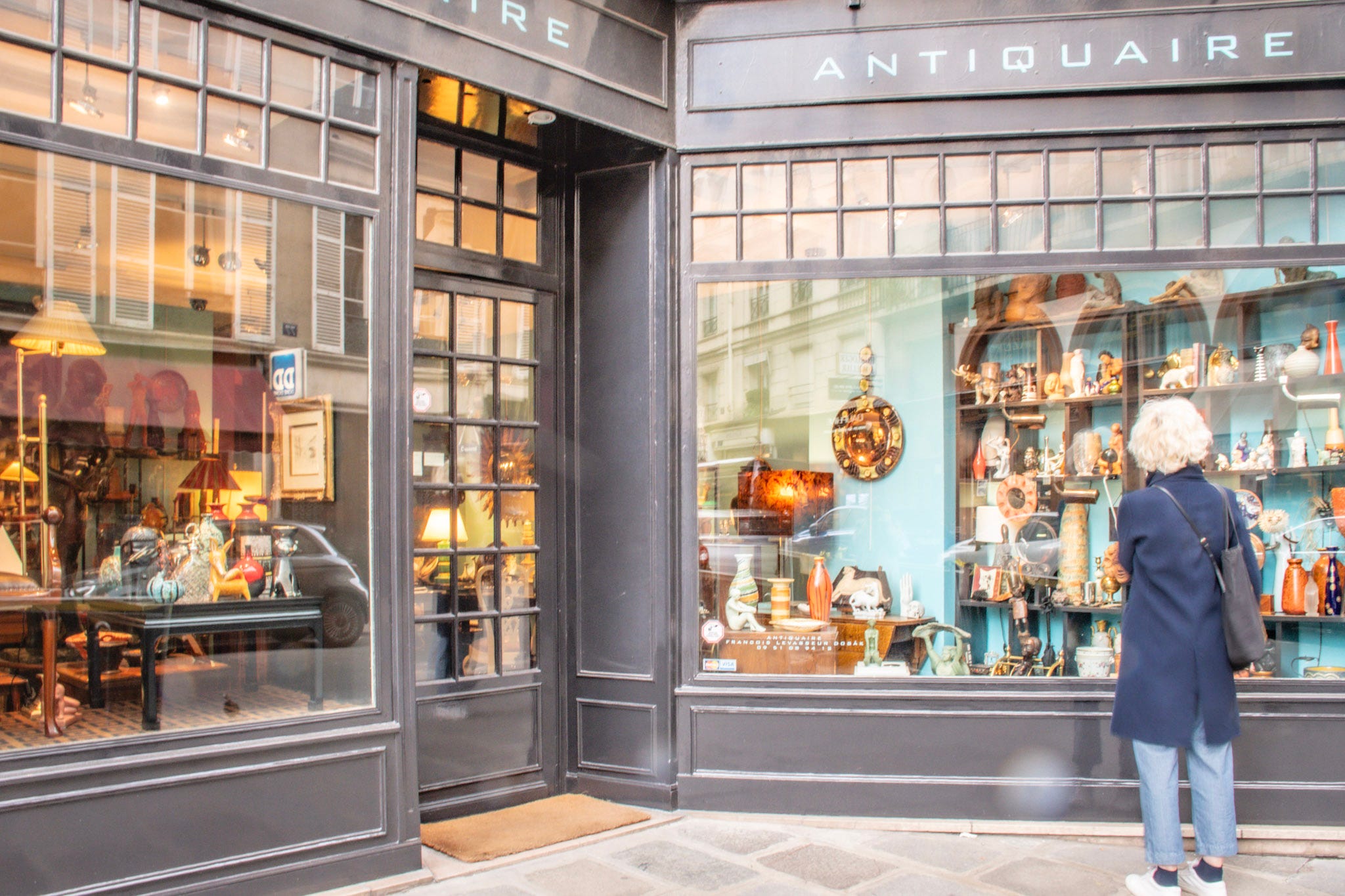
At 90 Antiquaire, it feels like stepping inside a carefully collected cabinet of curiosities.
A bit further along, Chatelles, tucked inside an eye-catching royal-blue Art Nouveau building, displays elegant Parisian flats in soft colours that seem made for wandering city streets.
Next door at Fairmount, I once found the perfect tan leather purse — the kind of purchase that instantly becomes a travel memory every time you carry it again.
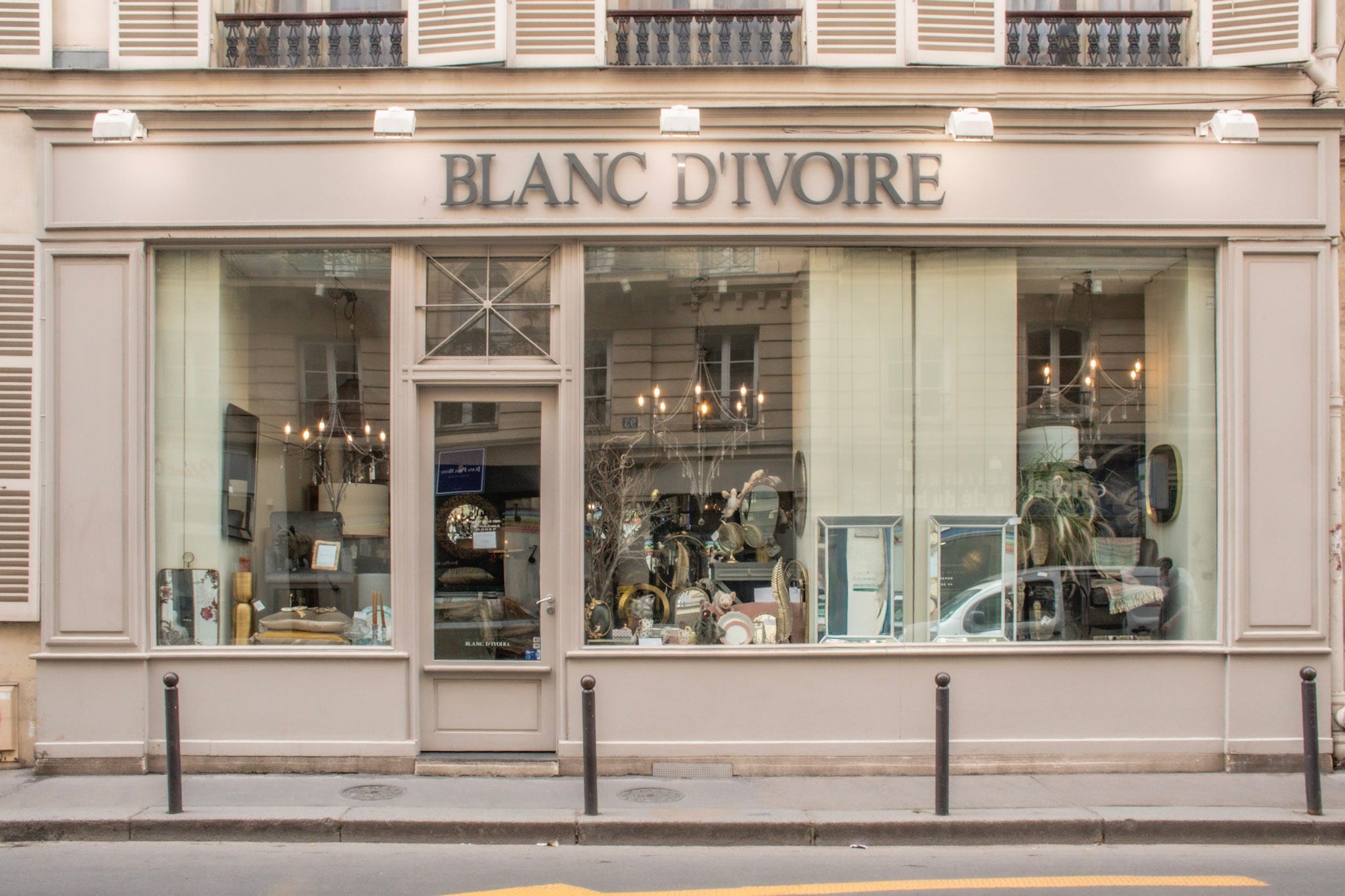
Further along, shops like Blanc d’Ivoire, La Maison du Bac, Balzac, and Sézane add to the rhythm of the street — interiors, clothing, textures, and colours — each storefront inviting you to slow down just a little more.
The Temptations of Rue du Bac
Then there’s the food lover’s stretch.
With cafés, restaurants, a bakery and even a small Italian enoteca, this section of Rue du Bac might be one of the most dangerous places in Paris to walk on an empty stomach.
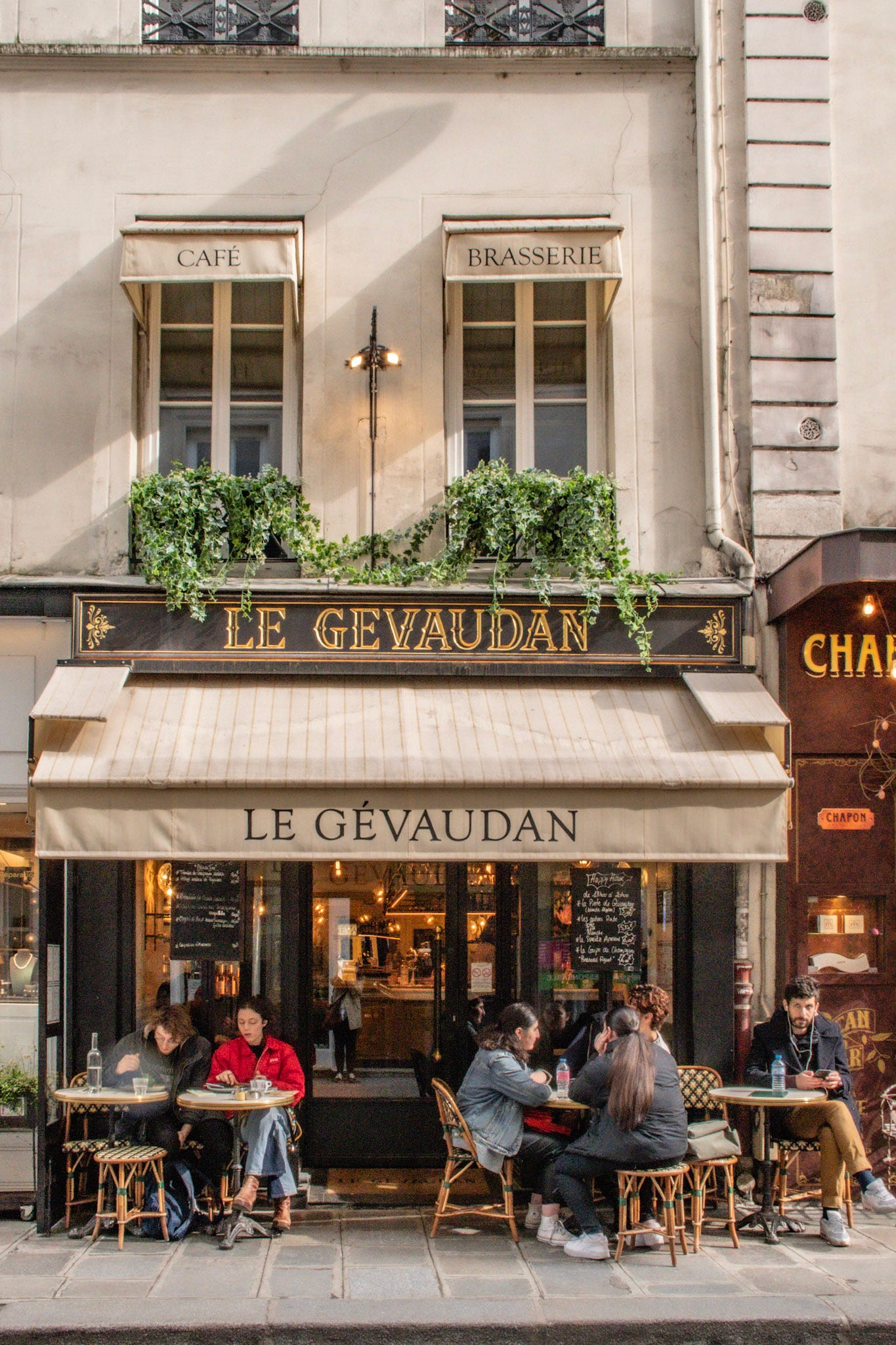
Café Varenne is the kind of neighbourhood brasserie where it’s easy to settle in for a relaxed lunch or linger over dinner while watching the rhythm of the street just outside. Le Gévaudan offers the kind of warm, bistro dining that feels quietly local.
And tucked among the shops is Pastavino, a small Italian enoteca where shelves of pasta, olive oil, and wine hint at simple meals waiting back at the apartment.
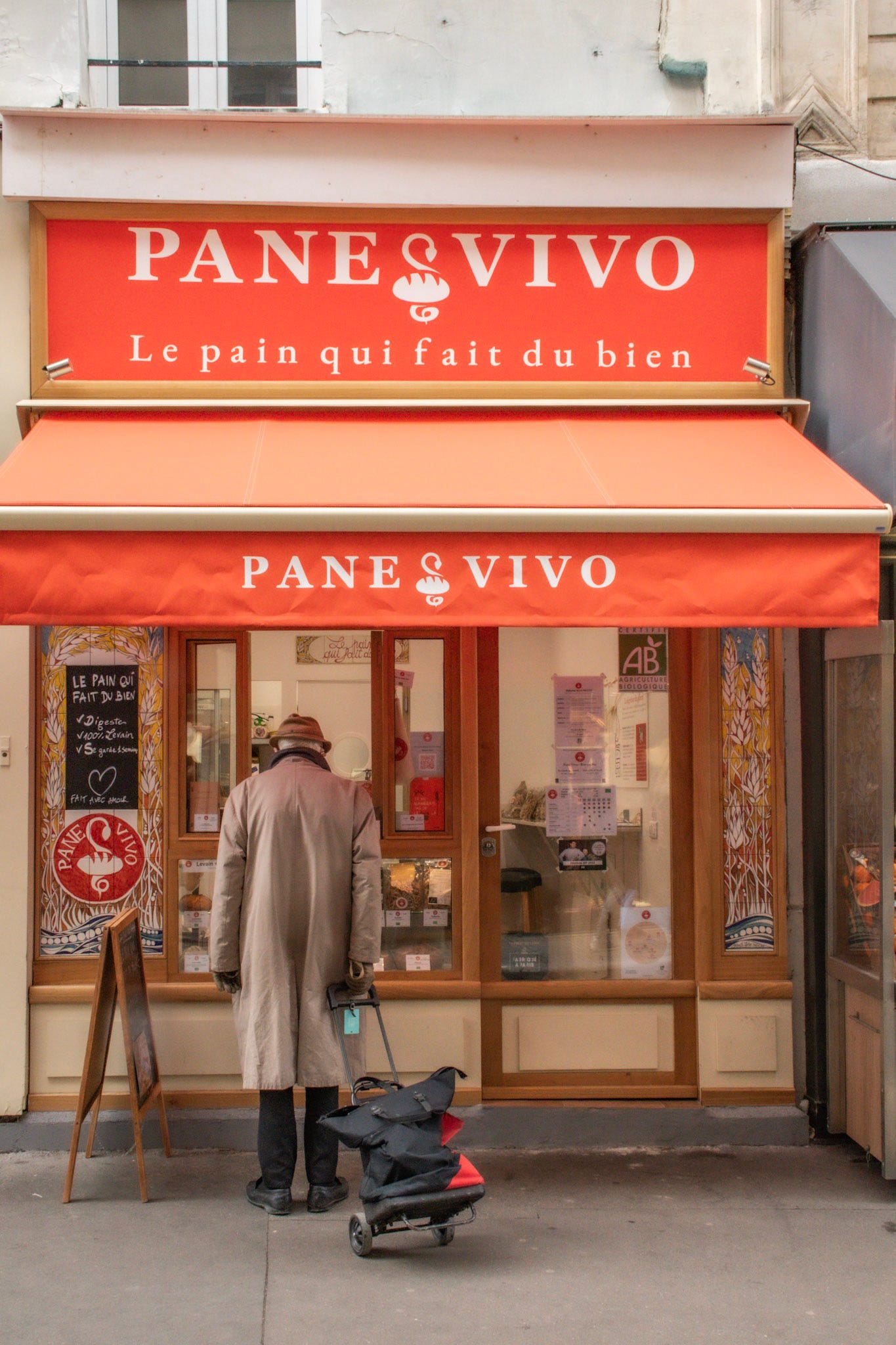
But it’s the sweets that often stop you in your tracks.
At La Maison de la Pistache, pistachios appear in nearly every form imaginable — creamy spreads, delicate pastries, jewel-coloured sweets.
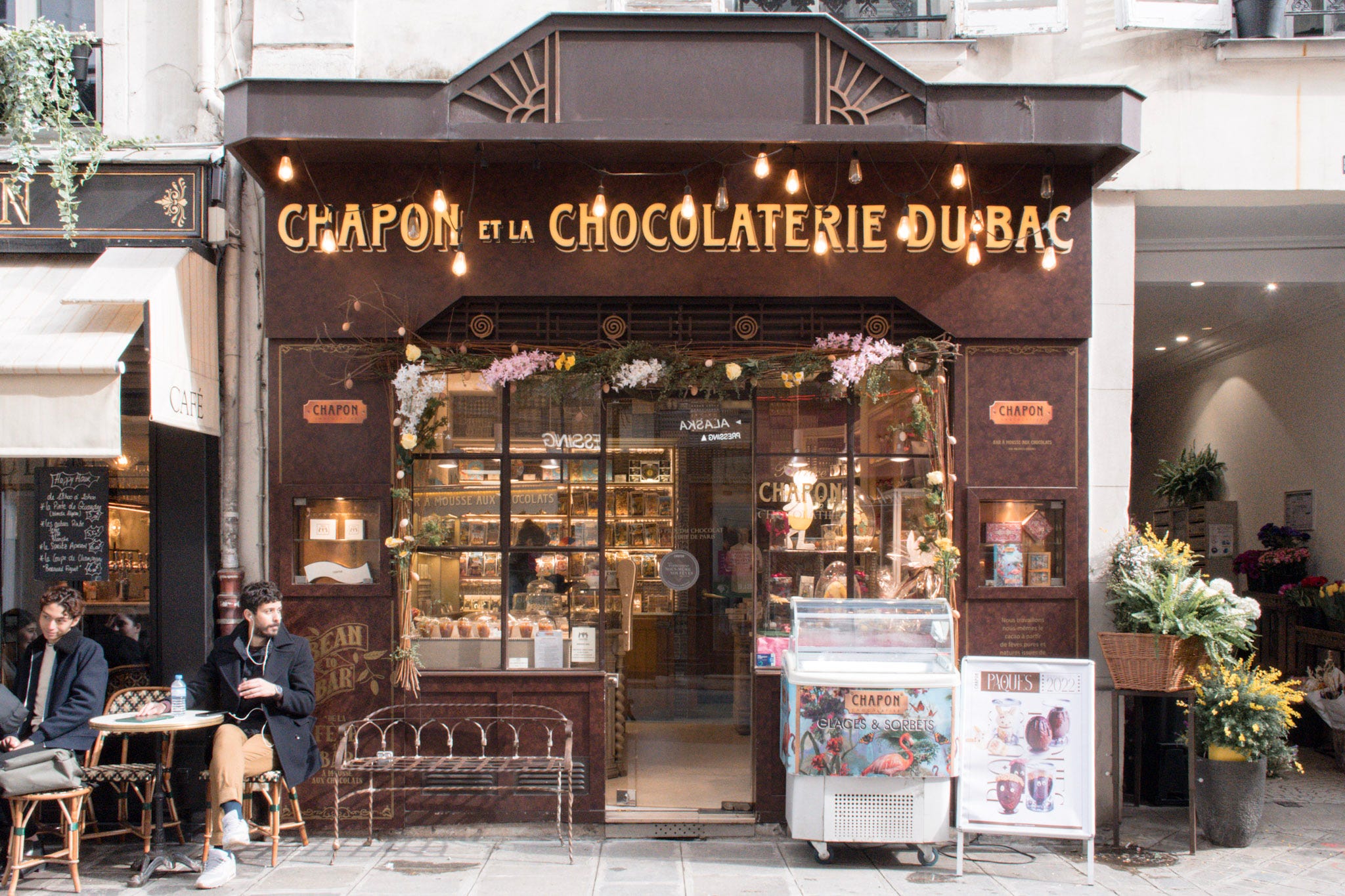
Just down the street, the windows of Chapon display their famous mousse au chocolat, each bowl smoother than the last.
Across the way, the historic confectionery Boissier wraps chocolates and candied almonds in pastel boxes that seem to belong to another century.
And at Jean-Paul Hévin, chocolate is treated almost like sculpture.
If you keep walking slowly, resisting the urge to buy everything, you’ll eventually reach Des Gâteaux et du Pain, where pastry chef Claire Damon’s creations look almost too beautiful to eat.
Almost.
Beyond the indulgence of sweets, Rue du Bac also hides a few small wine and spirits merchants where the bottles feel almost like history.
One shop I never miss is Conservatoire des Hémisphères – Art du Thé. Every visit, I leave with a few tins of tea to bring home — a small ritual that allows Paris to linger long after the trip ends.
Walking this street requires restraint.
Or at least the illusion of it.
Halfway down the street, there’s a place many people walk past without noticing.
Beaupassage.
Slip through the entrance, and suddenly the street noise disappears, replaced by a quiet courtyard filled with restaurants, a coffee roaster, Pierre Hermé café, public art, and soft light.
It feels like a small secret — even though it’s been here all along.
Staying on Rue du Bac
Over the years, I’ve stayed several times in a small collection of apartments just steps from the corner of Rue du Bac and Rue de Grenelle.
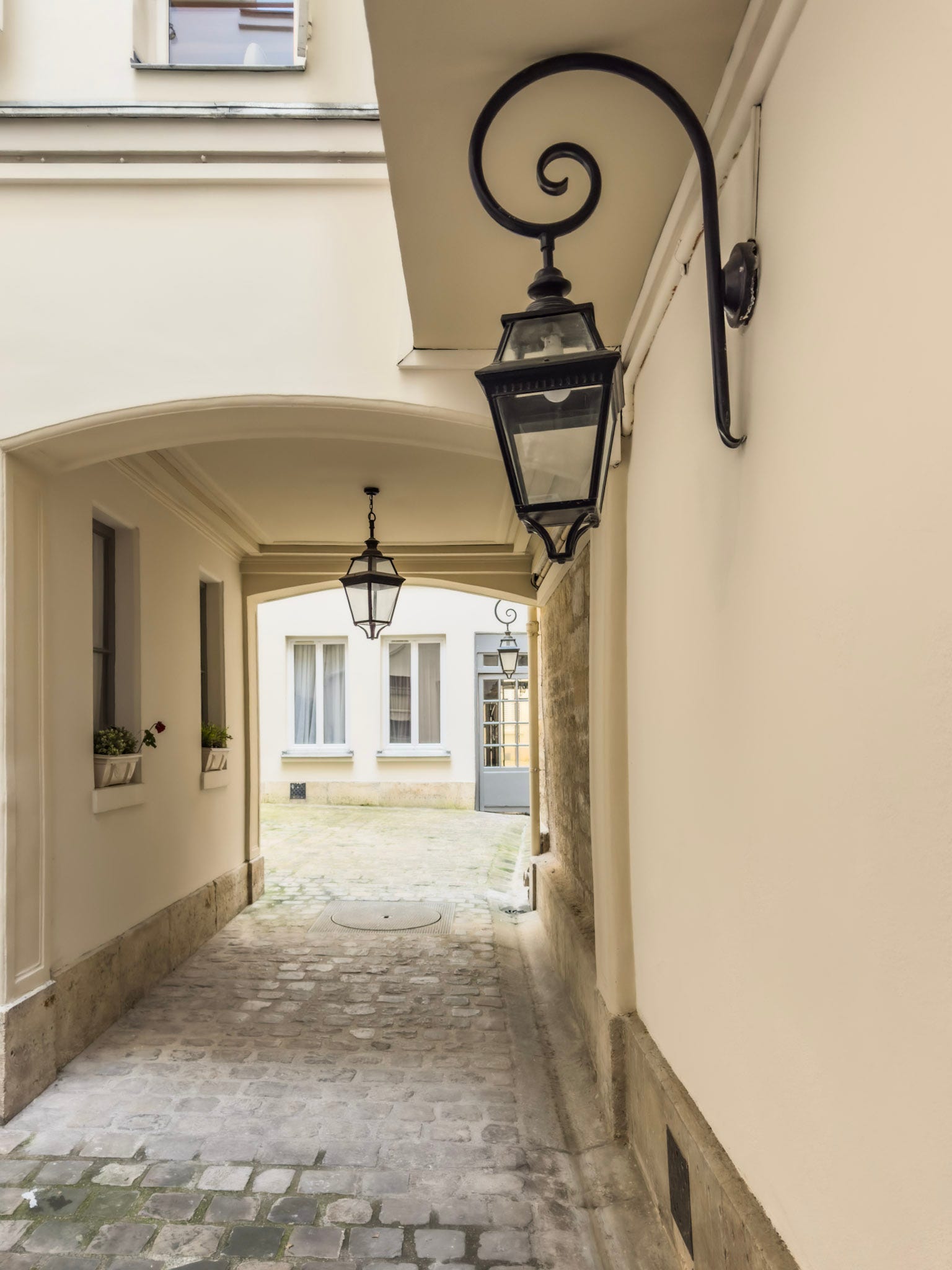
The building itself dates back to the 18th century, and still carries the quiet elegance of old Paris — beamed ceilings, herringbone wood floors that creak gently underfoot, and an interior courtyard where lanterns glow softly in the evening.
These three apartments — two studios and a one-bedroom duplex — are each thoughtfully designed to feel more like a private pied-à-terre than a rental.
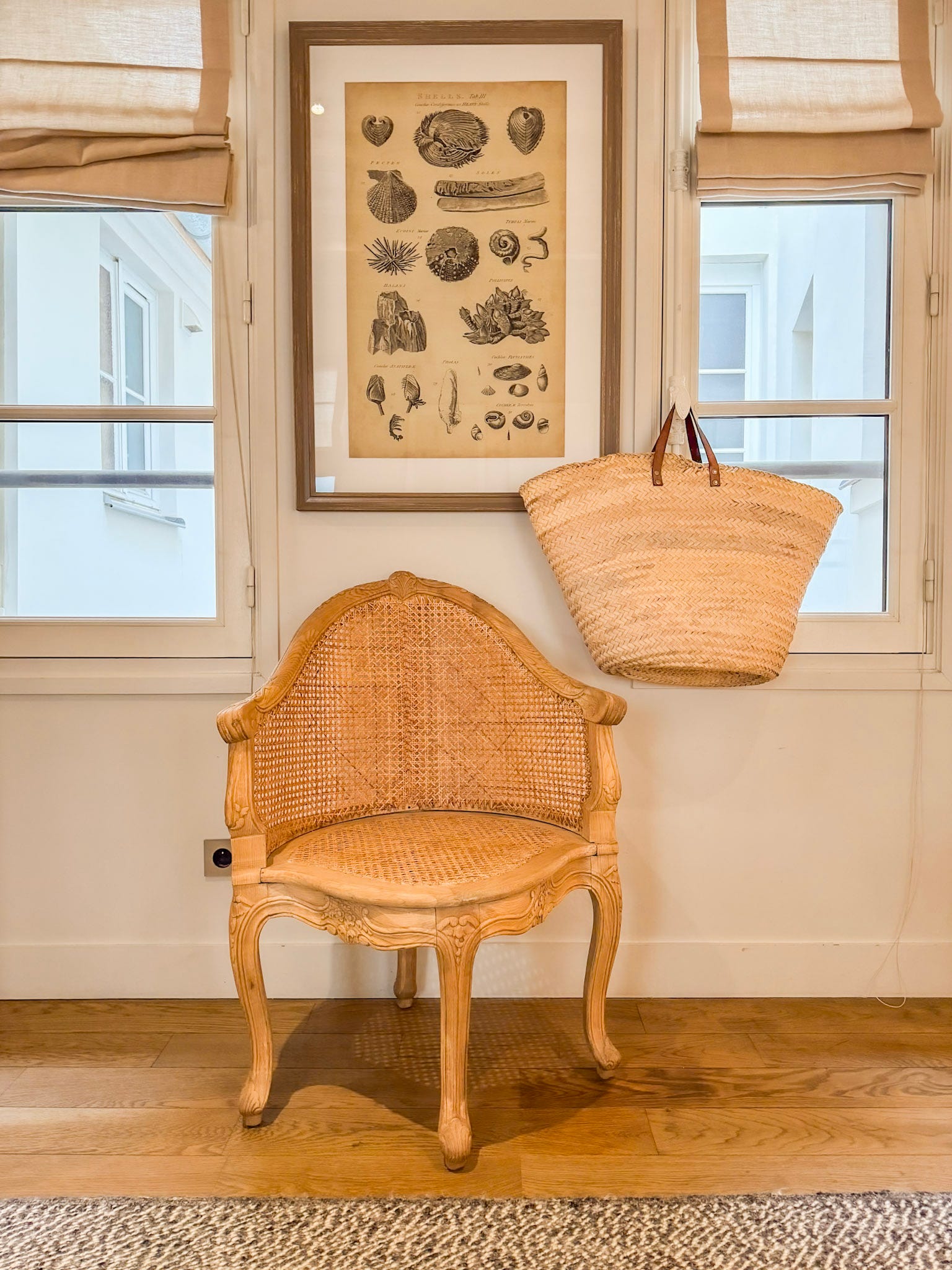
One studio sits tucked beneath the roof, where morning light filters through dormer windows and the soft neutral tones make the space feel instantly calm and lived-in. Another apartment unfolds across two levels, with tall windows opening onto the courtyard, exposed beams, and an upstairs bedroom that feels wonderfully quiet after a long day walking the city. And the third, a ground-floor studio, blends warm, earthy tones with a beautifully finished bathroom that feels almost like a small boutique hotel.
It’s the kind of place that makes Paris feel less like a visit and more like a temporary home.
Where Rue du Bac Leads
One of the things I love most about this street is where it quietly takes you.
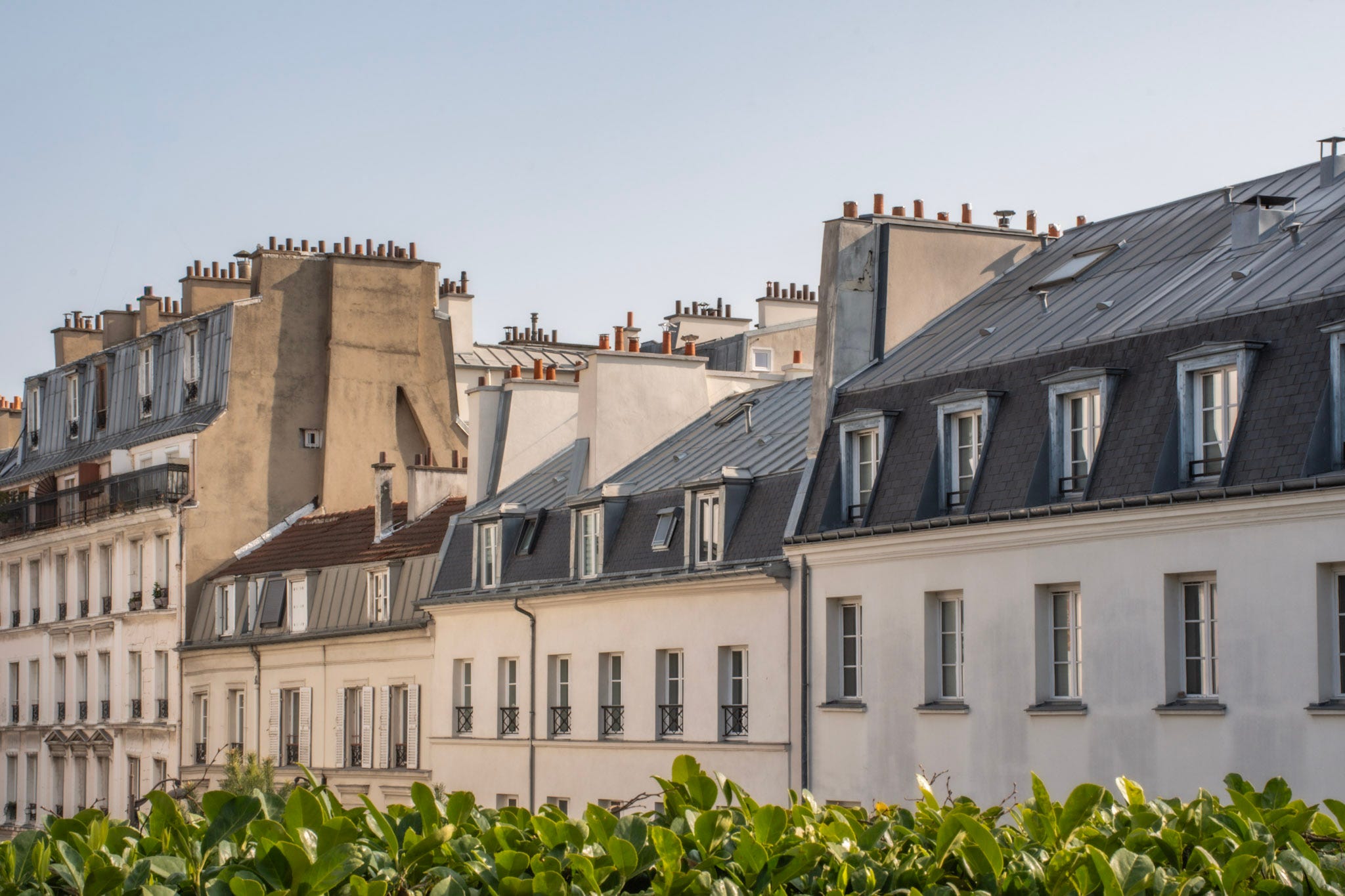
Walk north and, within minutes, the buildings open toward the Seine.
Head south and you’ll find yourself at Le Bon Marché and La Grande Épicerie de Paris, one of the most beautiful food halls in the city.
But Rue du Bac also unfolds sideways into the rhythm of the Left Bank.
Wander east, and the streets slowly blend into Saint-Germain-des-Prés.
Walk west, and you drift toward the Musée Rodin and, a little farther on, the Eiffel Tower.
And yet, the truth is, I rarely hurry toward any of those destinations.
Because the real pleasure is simply walking Rue du Bac itself.
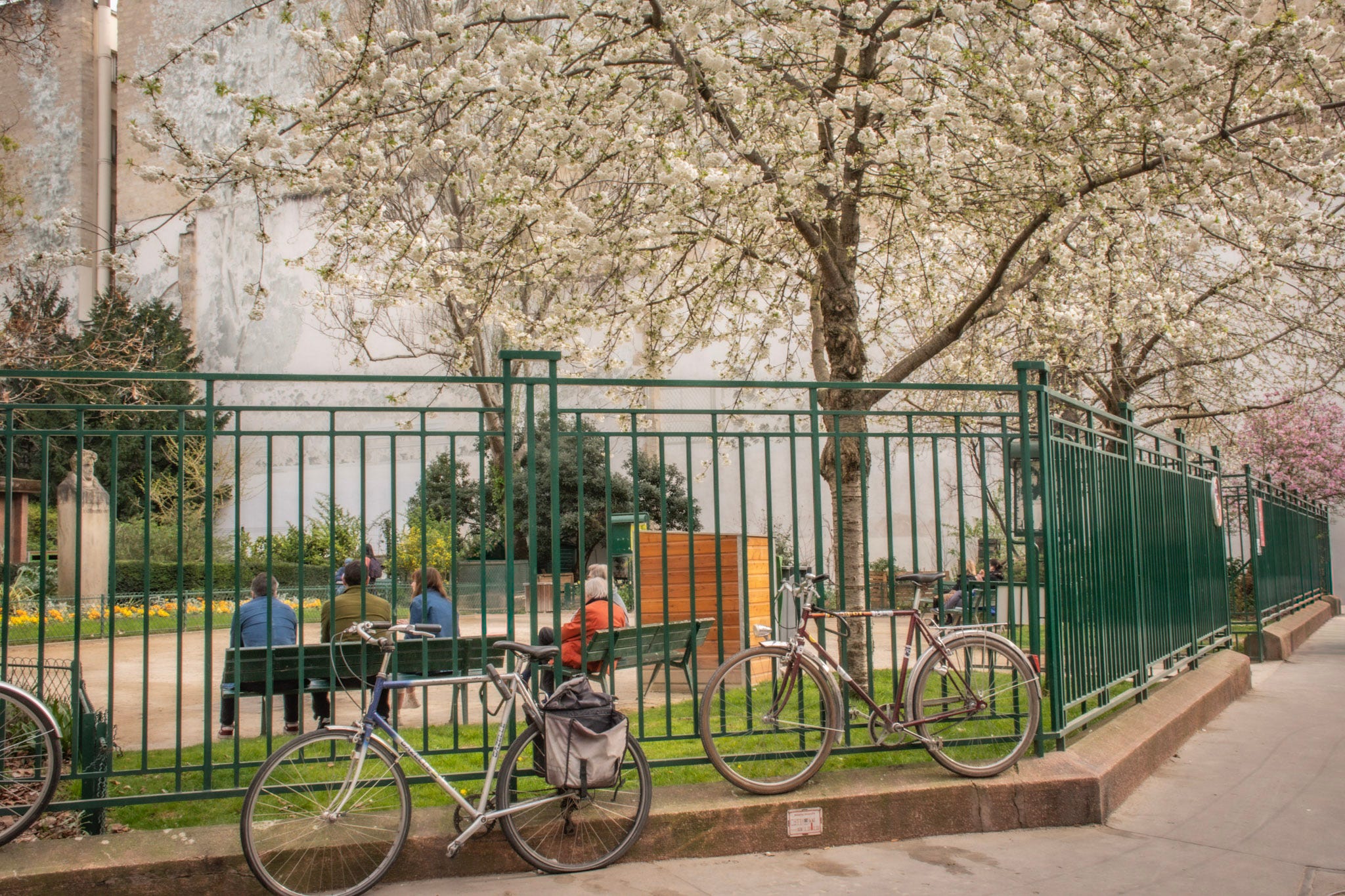
For me, in Paris, that street will always be Rue du Bac.
And each time I stay on that quiet corner at Rue de Grenelle, it feels a little less like visiting — and a little more like returning to a street that has quietly become part of my Paris.