
A Slow Return: The Paris Square I Keep Coming Back To
Square Georges Cain, the history I missed for years, and a walk around the four streets that surround it.

Some of my favourite places in Paris are the ones I found before I started making a point of looking for them.
Well over a decade ago, I was wandering through the Marais when I came across a small garden on Rue Payenne. This was before I travelled with lists of squares and gardens I wanted to seek out. I wasn’t looking for anything in particular. I just happened to walk past the gates and stop.
Square Georges Cain opens up in an almost perfect circle. There’s a statue in the middle, roses around it, then a gravel path with benches around the outside. I remember being drawn to the symmetry of it before I knew anything at all about the place.
So I sat down.
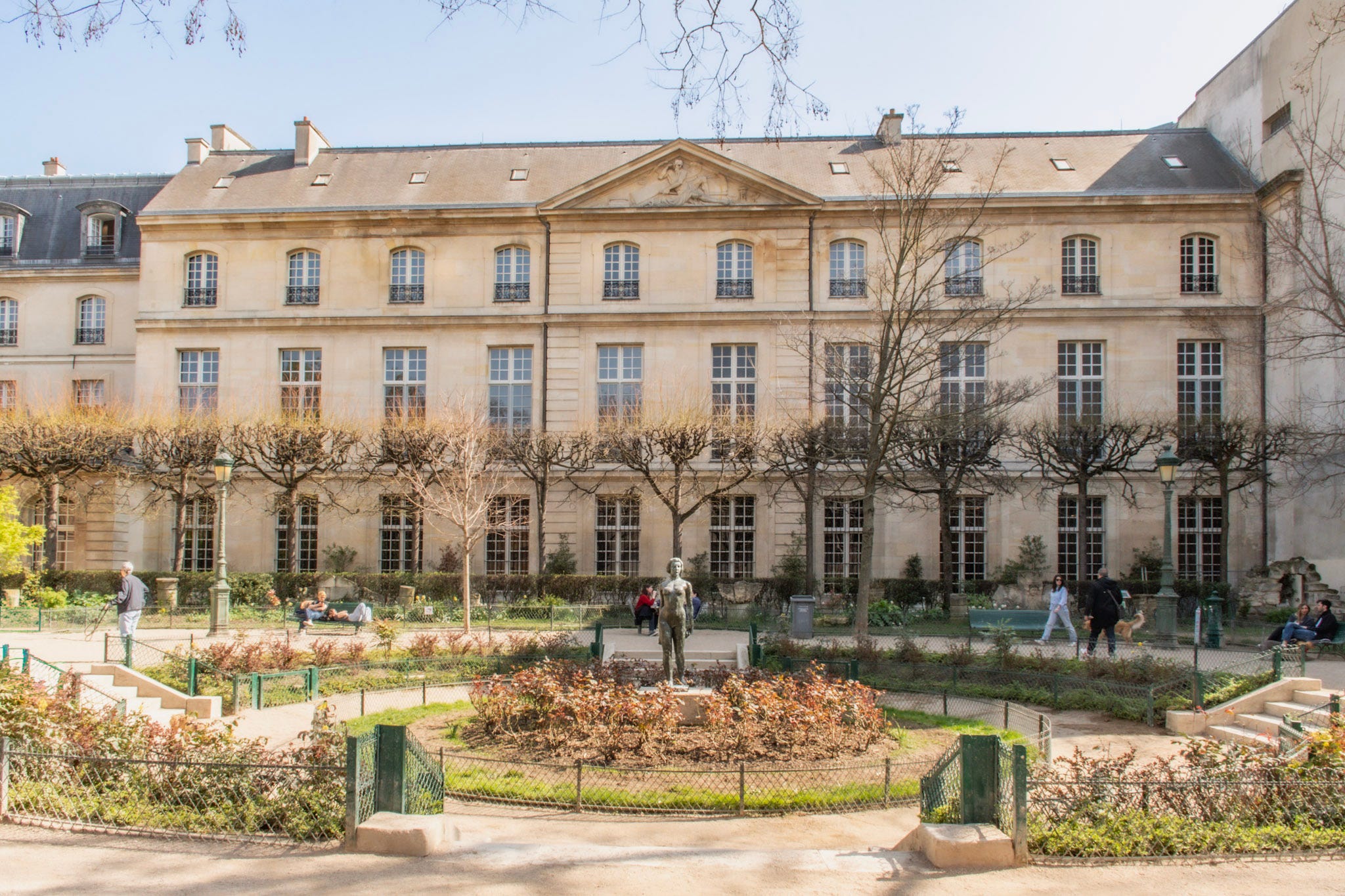
I couldn’t tell you now where I was going or what I did afterwards. What I do remember is going back on my next trip to Paris. Then the next, until at some point Square Georges Cain simply became one of those places I always worked into a walk through the Marais. And each time, I seemed to notice something I had missed before: a chess table or old pieces of stone propped against the walls. I’ve seen the garden budding in spring and covered in fallen leaves later in the year. In winter, when so much of it is bare, I notice the shape of the square and the ancient architectural artifacts scattered throughout.
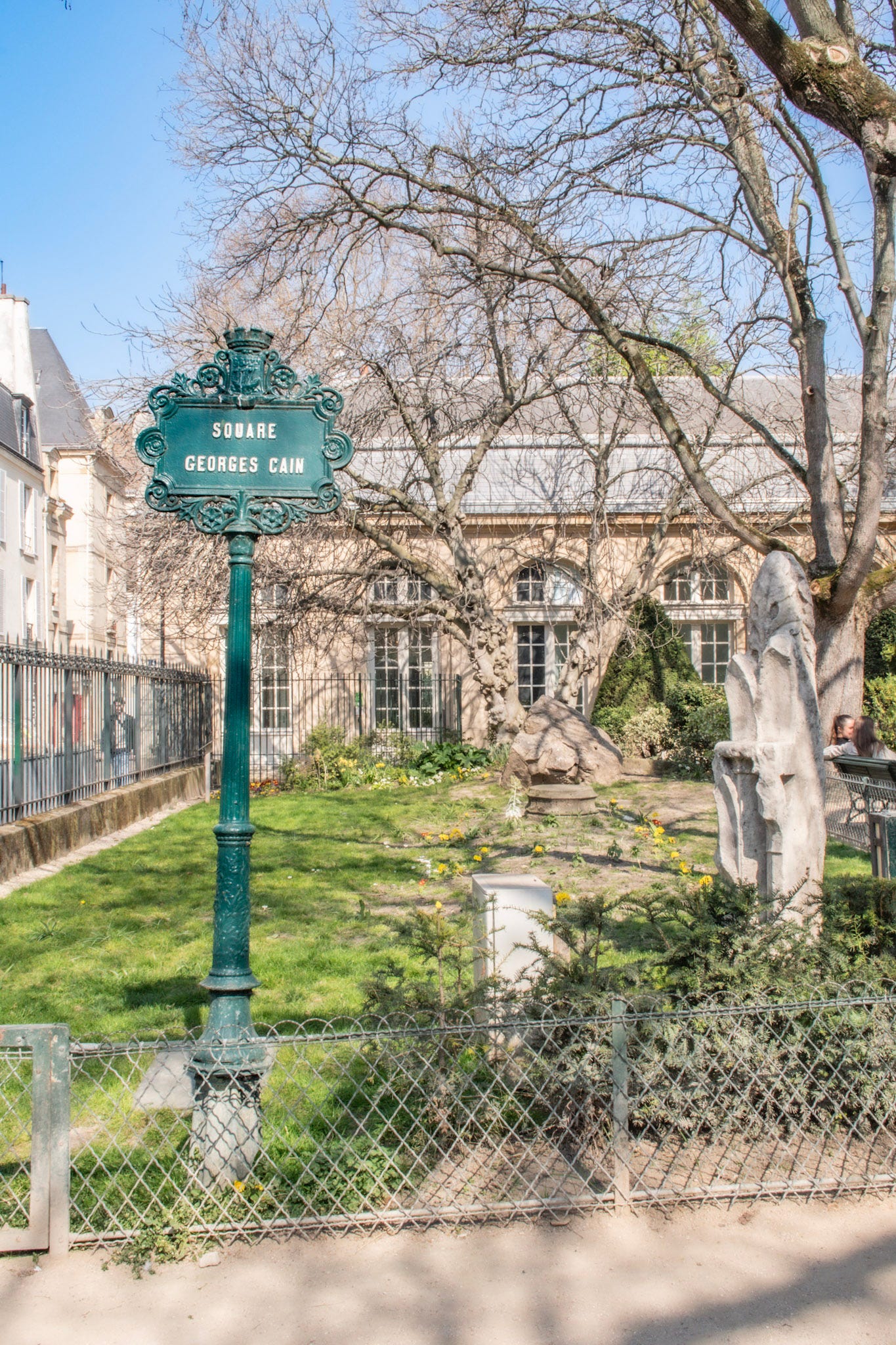
And then there are the dogs, which might be one of the reasons I love coming here so much.
It still feels very much like a neighbourhood garden. Locals come in with their dogs, stop to chat with someone they know and let them nose around while they catch up. I miss my own dog terribly when I travel, so I’m more than happy to sit on a bench and watch somebody else’s for a while. Every so often, one comes over looking for a pet, and I happily oblige.
That’s a very good day in Paris when that happens.
The History I Had Been Sitting Beside
For years, I thought those old stones scattered around the garden were simply part of the setting. I noticed them, of course, but never really wondered why they were there.
Eventually, curiosity got the better of me.
Square Georges Cain is almost an outdoor extension of the Musée Carnavalet next door. It sits on what was once part of the garden of the Hôtel Le Peletier de Saint-Fargeau, now part of the museum, and pieces from Carnavalet’s collection have found their way outside into the square. Suddenly, those stones I had been walking past became much more interesting.
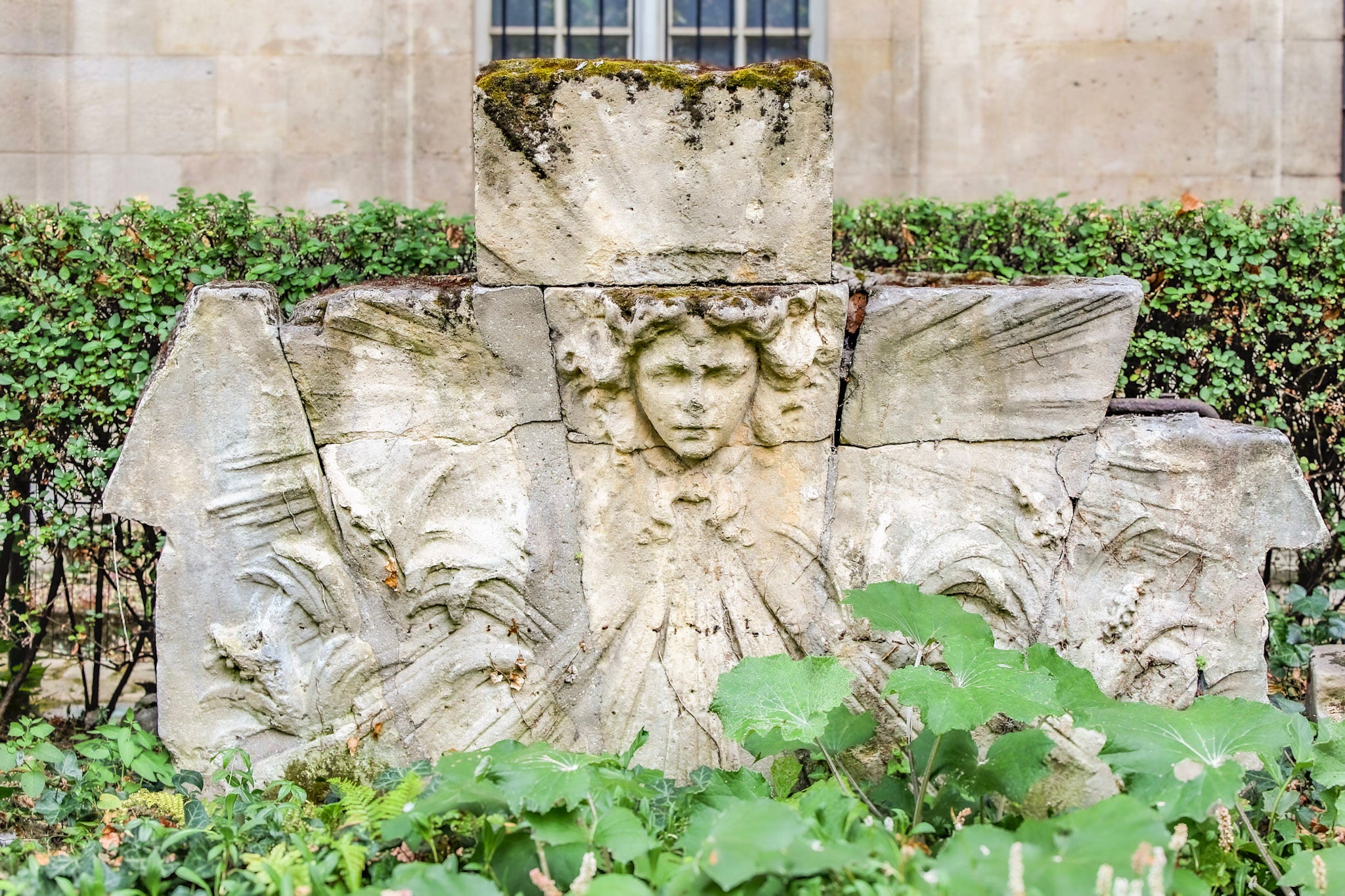
One of the largest is a surviving fragment from the Palais des Tuileries, part of the palace’s clock pavilion that survived the fire that destroyed the palace during the Paris Commune. Sitting in the same little garden is a Neolithic polishing stone once used to shape stone tools, and a column with a completely different Paris story.
That column was dug up on the Left Bank in the late 1920s while workers were extending Métro Line 10 near Rue Monge. It’s thought to have belonged to the former Carmelite convent that once stood there, and somehow ended up here in the Marais.
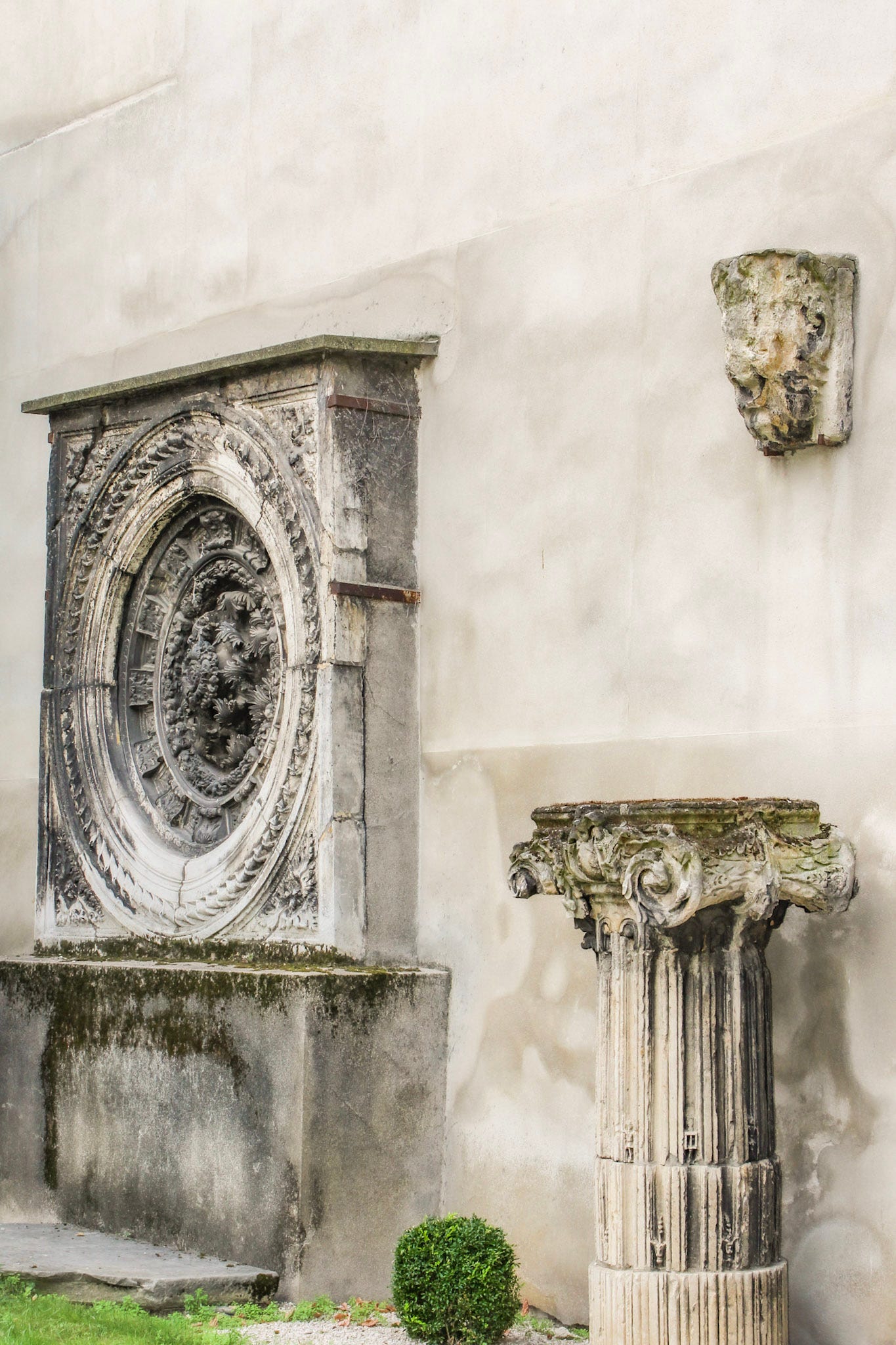
I love details like that. How many people have sat beside these remnants without having the slightest idea what it was? I certainly did.
The bronze statue in the centre was another thing I wanted to know more about. When I discovered that the woman I had been looking at all these years was sculpted by artist Aristide Maillol, I recognized the name immediately.
The Musée Maillol is on Rue de Grenelle in the 7th, directly across from the apartment where I normally stay in Paris, so I’ve walked past his name more times than I could count.
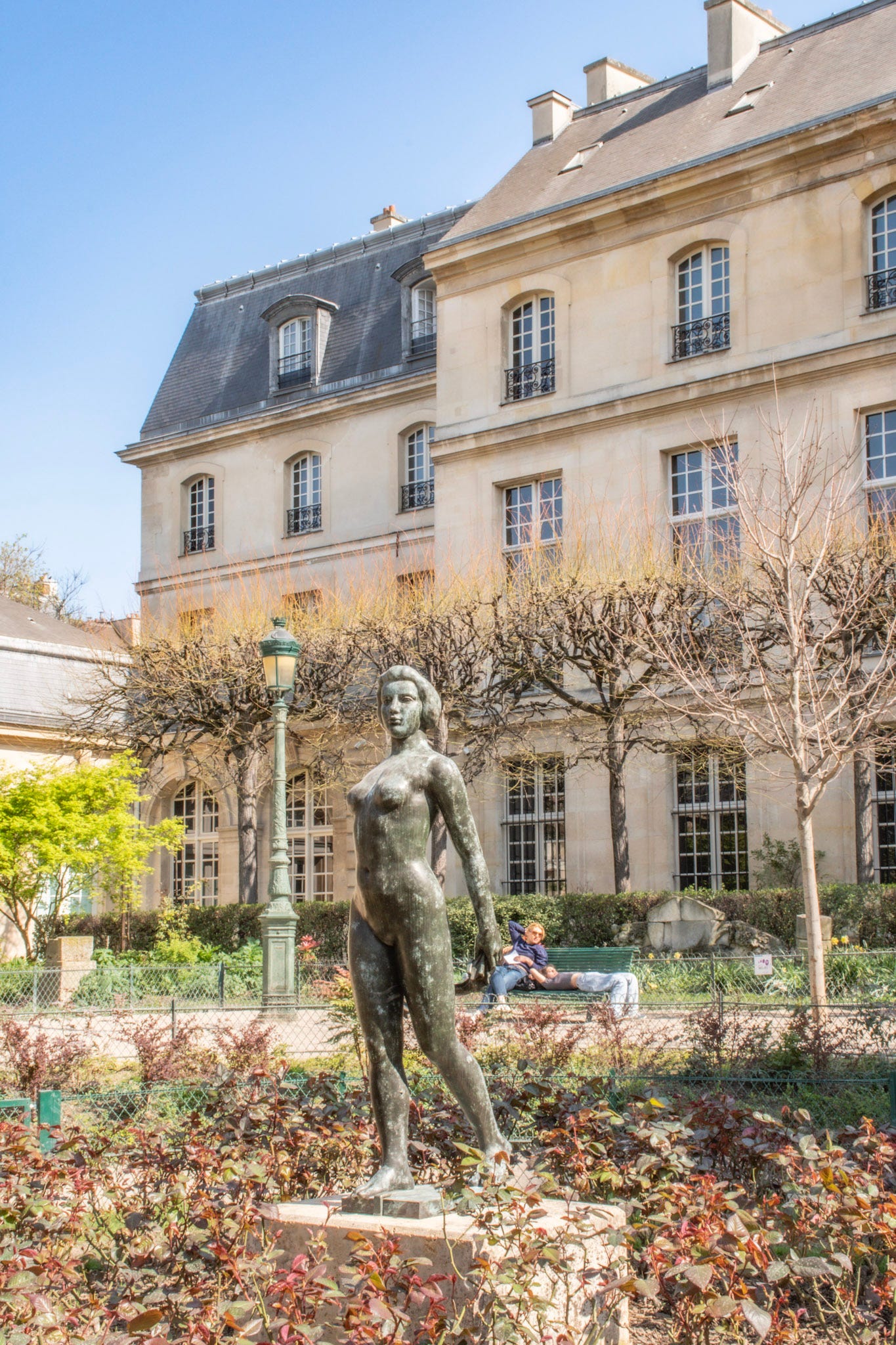
I later started spotting his work elsewhere in the city too, particularly his sculptures tucked among the trees in the Tuileries Garden. It was funny to realize I had also been sitting across from one in this little square for years.
There was still one rather obvious thing I had never bothered to find out. Who was Georges Cain?
He was a painter and writer, but his connection to this part of Paris is what interested me most. He spent more than twenty years as curator of the Musée Carnavalet, helping preserve the history of the city. Then the name of the square clicked. A garden named for a man who spent so much of his career preserving Paris sits right beside Carnavalet, surrounded by pieces of the city’s past.
And somehow I had been coming here for years before I knew any of it.
If You Go: Walk the Block With Me
If you’re coming to Square Georges Cain, come with me for one loop around the block. There is an awful lot packed into these four streets.
Continue along Rue Payenne to Jardin Lazare Rachline, a pretty little garden tucked behind the Musée Cognacq-Jay. I like it as much for the architecture of the Hôtel Donon behind it as I do for the garden itself.
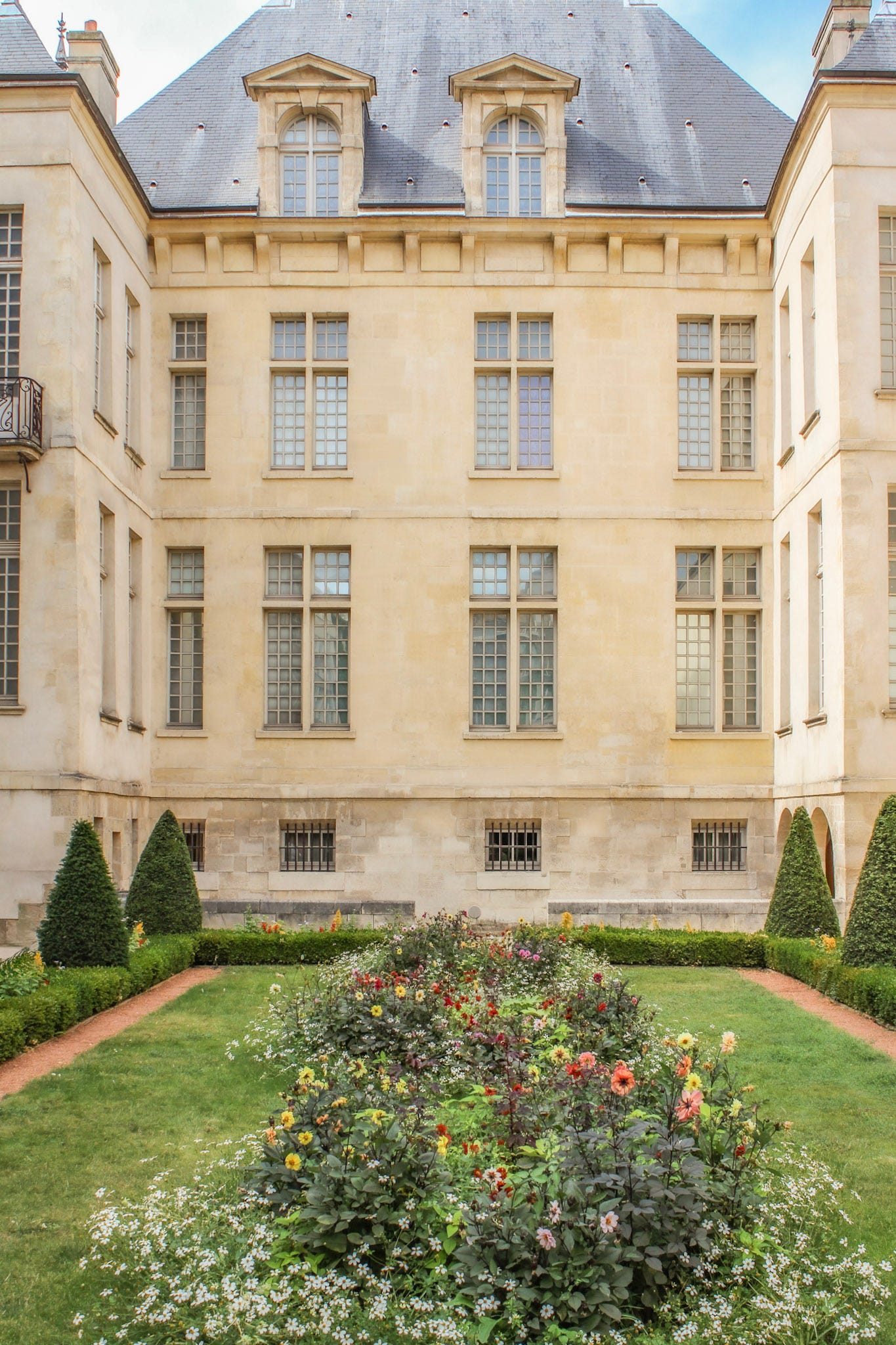
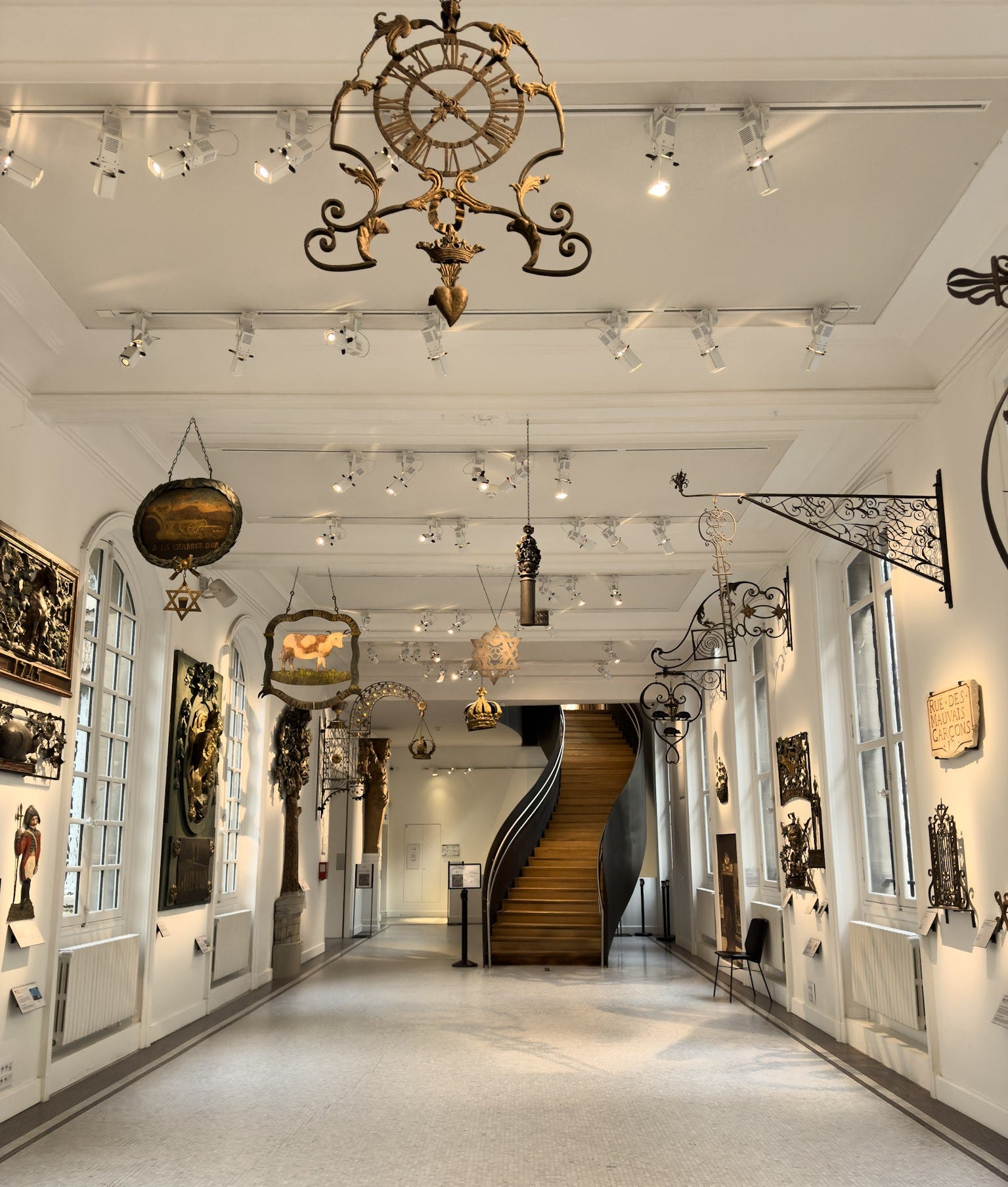
Around the corner on Rue de Sévigné is the Musée Carnavalet, one of my favourite free museums in Paris. It tells the history of the city, but what I enjoy the most are the old metal shop signs that once hung above Paris streets.
I also love looking out the museum windows into the formal courtyards below, with their clipped boxwood and red pea-stone paths. If you visit during the quieter months, from late fall through winter and into early spring, you’ll often see people sitting by those windows sketching the gardens. I completely understand why.
When you come back outside, stop for a second on Rue de Sévigné and look down the street. In one direction, at the far end, you’ll see the bright red doors of Saint-Paul-Saint-Louis, the 17th-century Baroque church on Rue Saint-Antoine.
Now turn around.
Walk the other way toward Rue du Parc-Royal, and you’ll notice the pinkish-red brick mixed in among the stone façades of the old hôtels particuliers. It’s a very pretty little stretch.
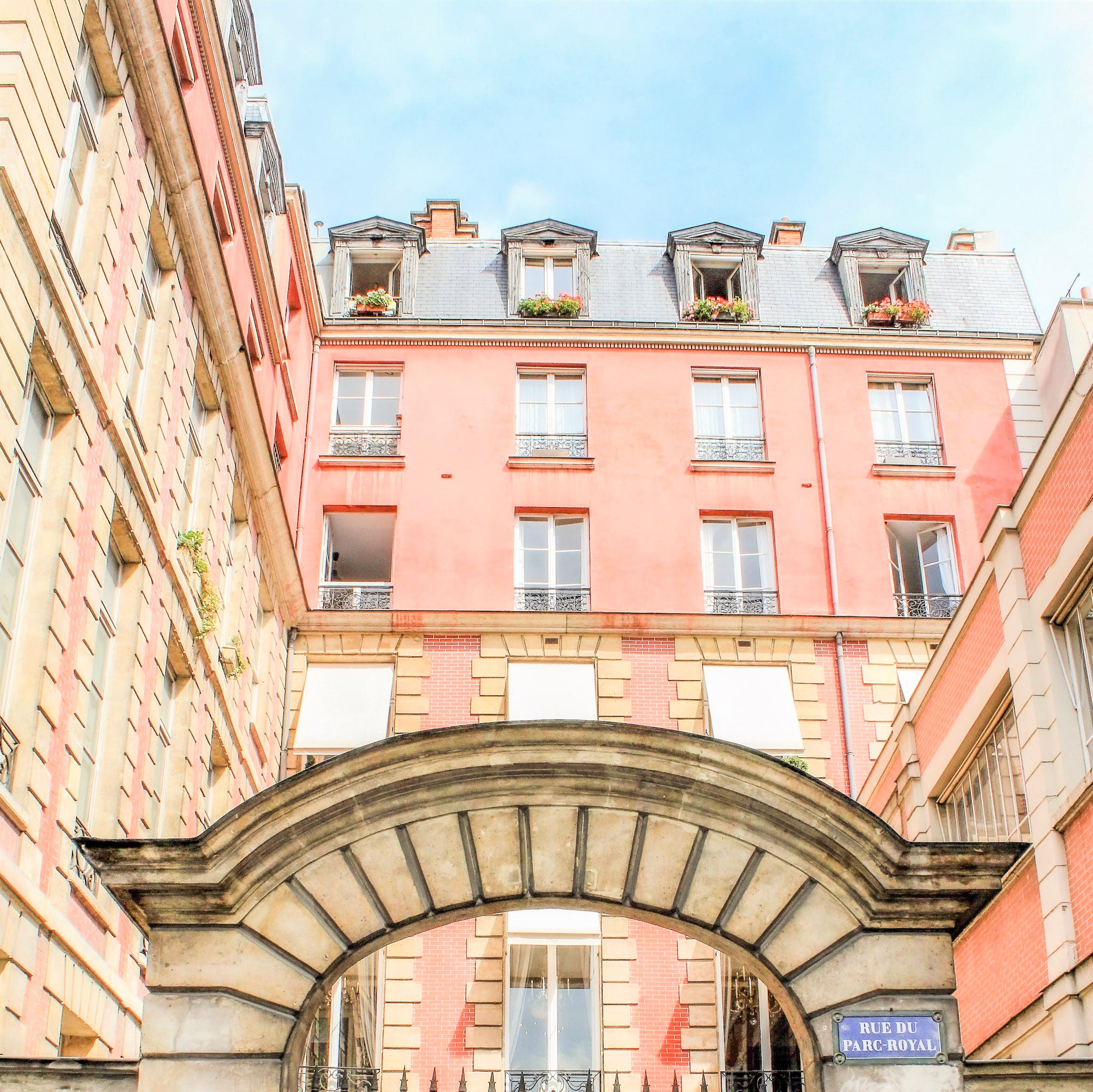
When you reach Rue du Parc-Royal, Square Léopold-Achille is just across the street. It’s more of a neighbourhood park than Square Georges Cain, with families and children using it, but worth a look before you complete the loop back to Rue Payenne.
And if coffee sounds good by then, FIKA is almost hiding from you.
It’s inside the courtyard of the Institut Suédois on Rue Payenne, directly across the street from Georges Cain Square, a Swedish café built around the tradition of fika, stopping for coffee and something to eat. I usually go for one of the cinnamon or cardamom buns.
Then you’re right back where you started.
Funny how a place I found completely by accident more than a decade ago became somewhere I now return to whenever I'm in Paris.
I love this. You've encapsulated a perfect neighbourhood tour for me.
Thank you for the pointer on a museum focused on the history of Paris.